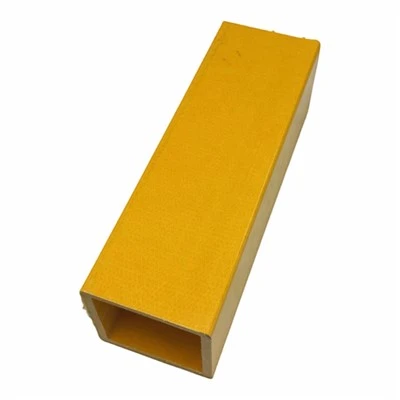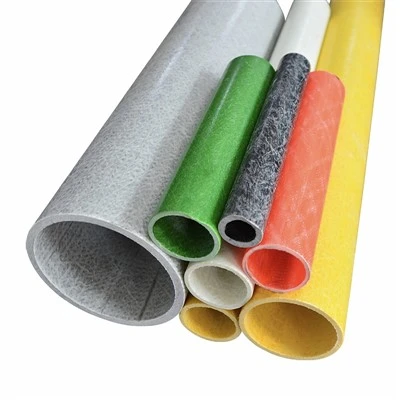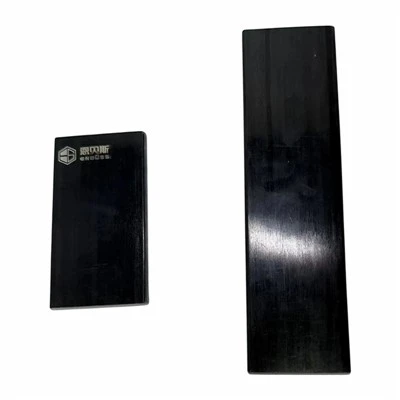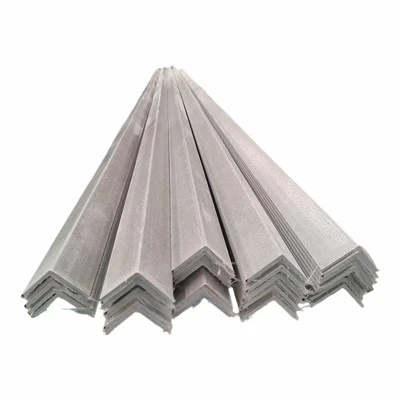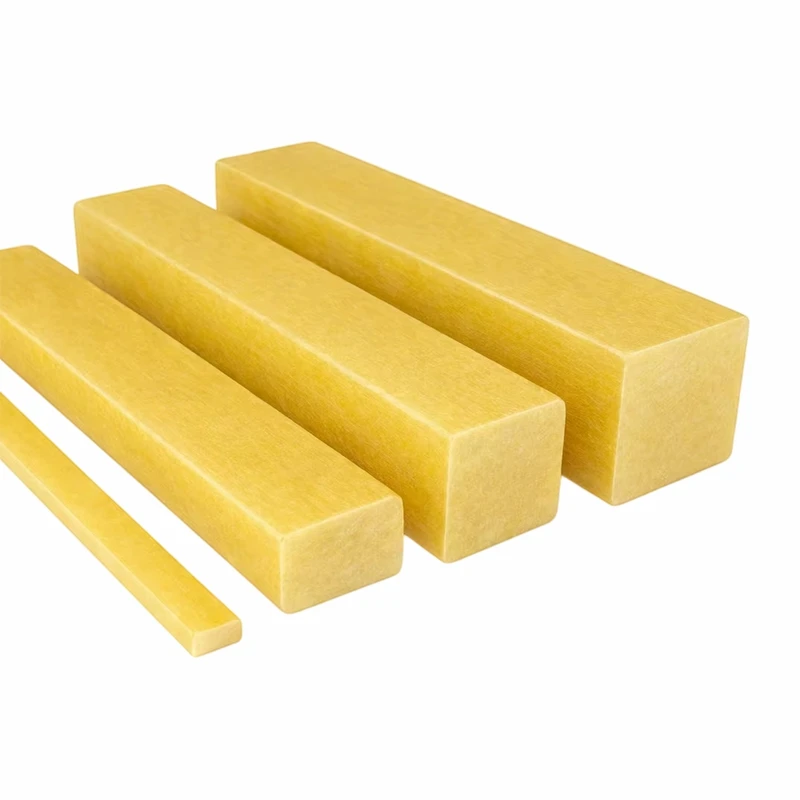


Henan Enbuess Composite Materials Co., Ltd. is one of the leading manufacturers and suppliers of fiberglass square bar in China. We are committed to providing high quality customized service for global clients. If you're going to buy high strength fiberglass square bar made in China, welcome to get free sample from our factory.
Fiberglass Square Bar for Stakes, Posts and Clamped Parts
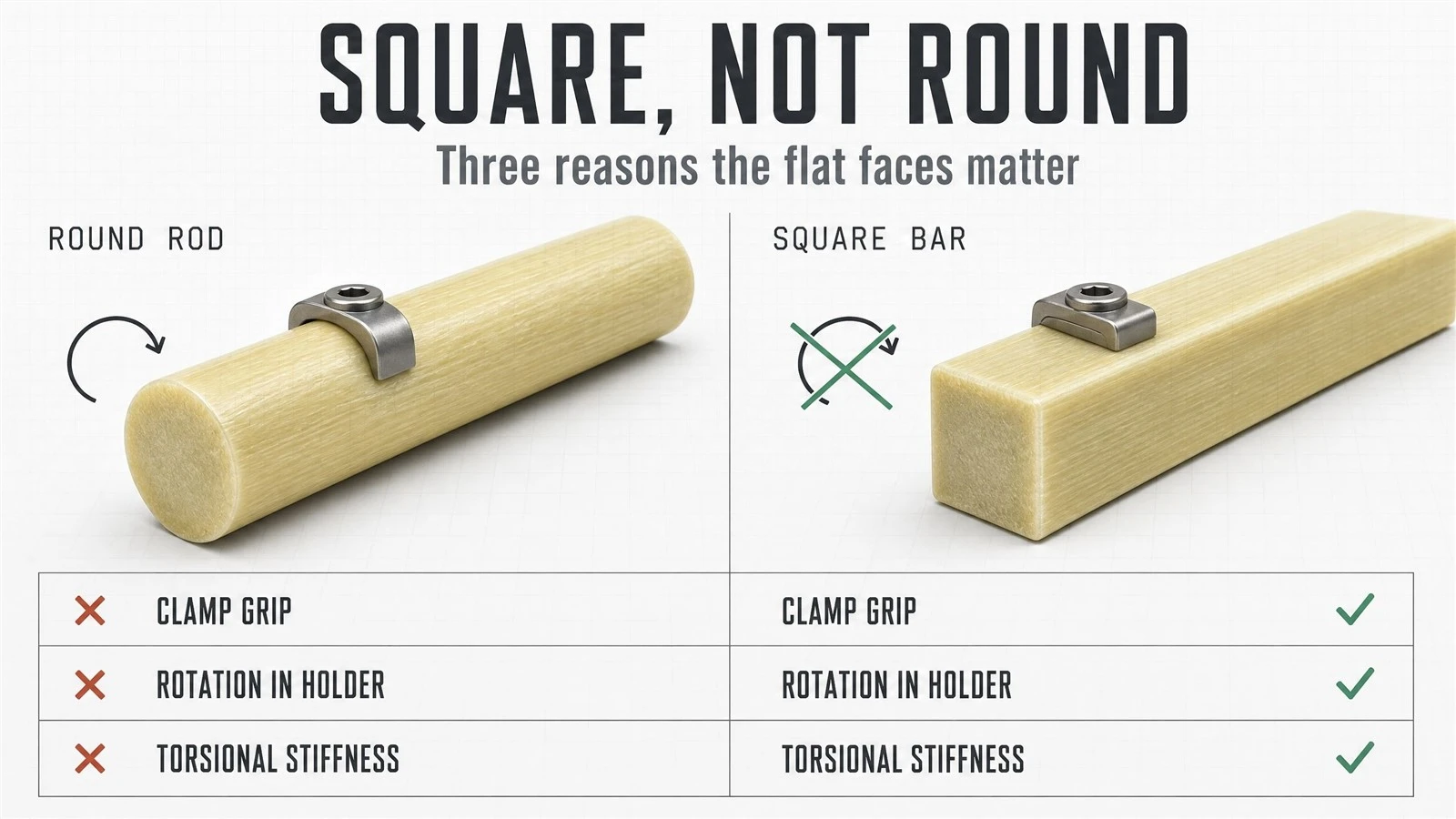
Square bar is round rod with the faces flattened. That sounds like a small difference and it is not: flat faces give a clamp something to grip, stop a part rotating in a holder, and let you drill a cross-hole that will not spin under load.
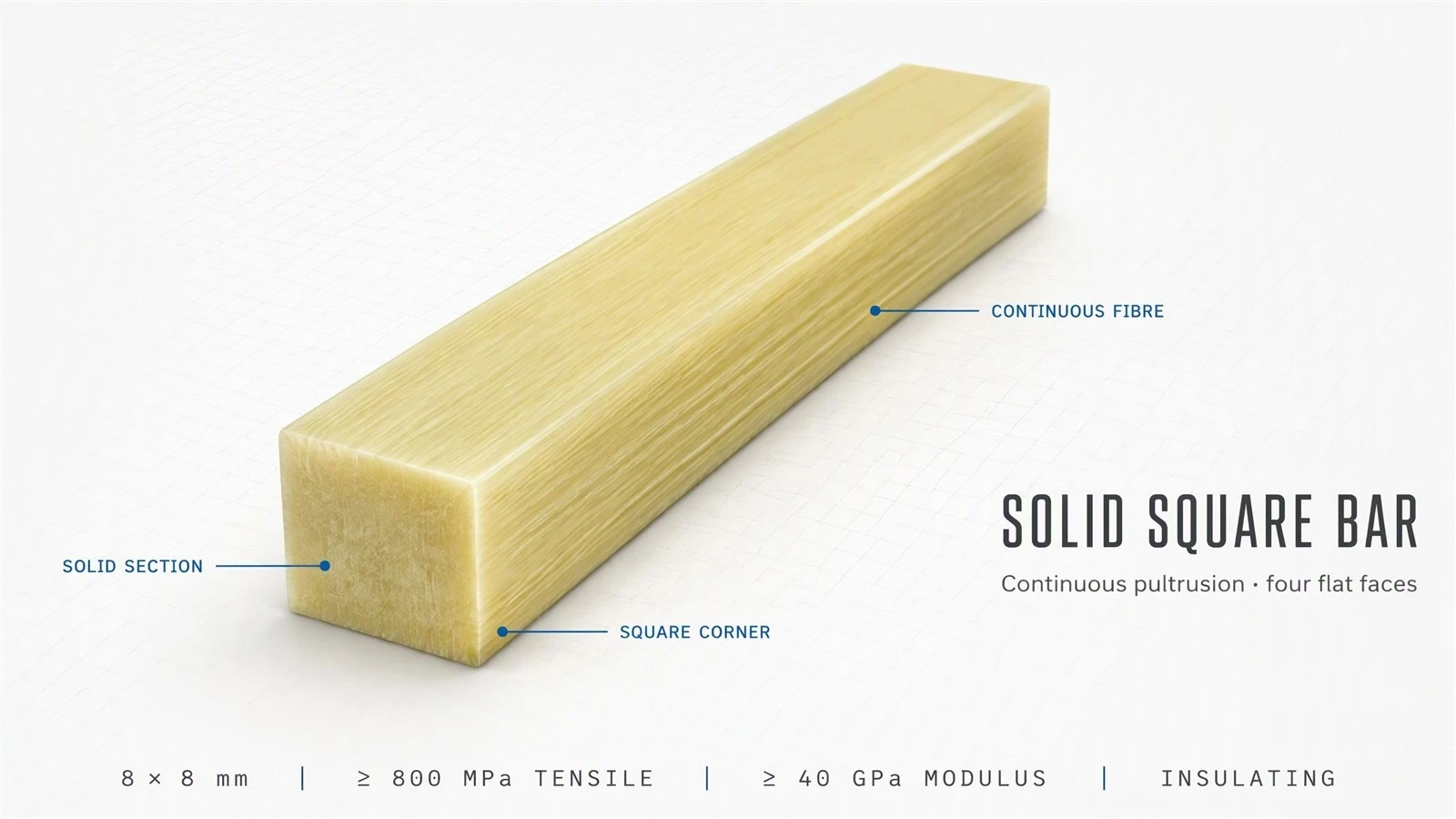
We hold two square bar dies, both at 8 × 8 mm. That is the honest position - so if your design needs a different section, tell us early, because this is the family where tooling is most likely to be required.
Standard sizes
Two dies, listed in full. Any other square section needs a new die - and a solid square die is one of the simplest to make, so tell us the size and the quantity and we will quote it.
|
Section (mm) |
Weight (kg/m) |
Tooling |
|
8 × 8 |
0.15 |
Existing |
|
8 mm square |
0.15 |
Existing |
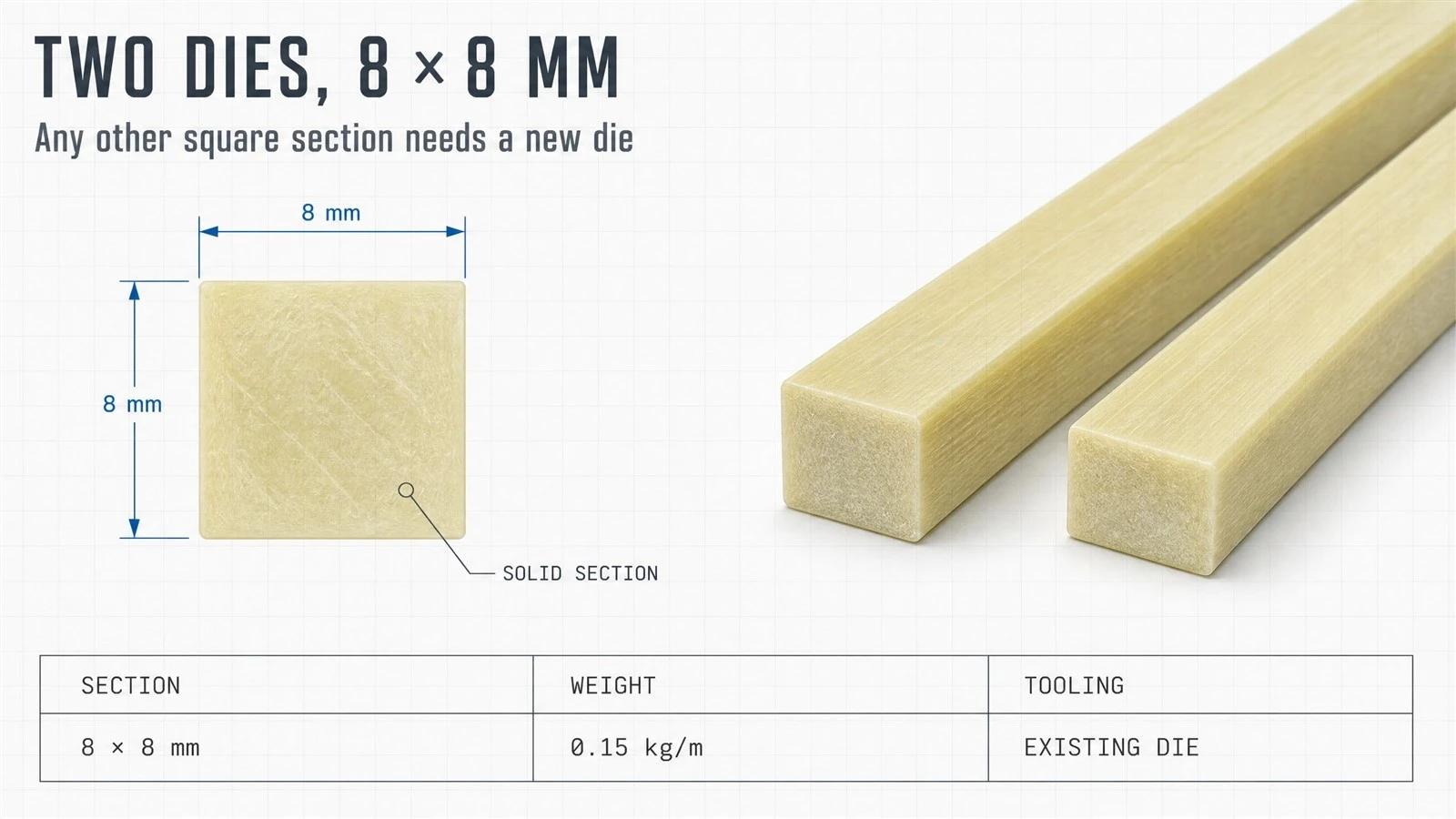
Two sizes is a short list, so the practical question is usually whether one of these works or whether tooling is worth it. A solid square die is relatively inexpensive compared with a hollow section, so for a running order it is often justified - ask and we will quote both the die and the piece price.
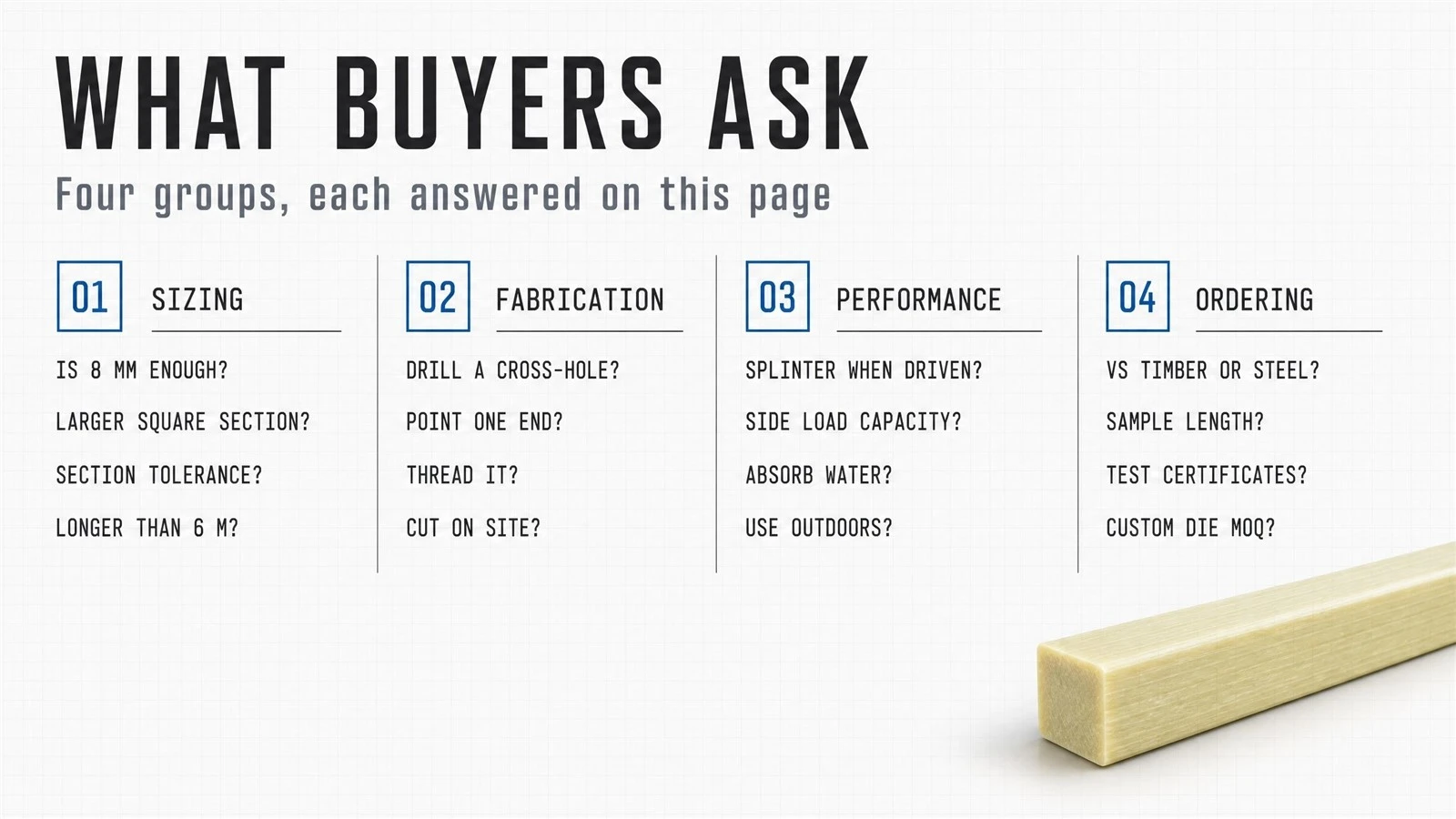
What buyers ask about this profile
Four groups. Each one is answered on this page.
Sizing
Is 8 mm right for my stake or post?
Do you hold a larger square section?
What is the section tolerance?
Can I get it longer than 6 m?
Fabrication
Can I drill a cross-hole?
Can I point one end for driving?
Can I thread it?
Can I cut it on site?
Performance
Will it splinter if I drive it in?
How much side load will a stake take?
Does it absorb water?
Can I use it outdoors?
Ordering
How does it compare with a wooden stake or steel post?
Can I get a sample length?
Do you supply test certificates?
What is the MOQ on a custom die?
Why square rather than round
Three reasons the flat faces matter.
|
A clamp grips a flat face and a round one slips |
|
Any fitting that relies on friction - a clamp, a collar, a set screw, a bracket - holds far better on a flat face than on a curve. On round rod, a clamp has to be tightened harder to resist rotation, and that extra load goes into a composite as bearing stress, which is the direction the material is weakest. Square bar lets the fitting do less work. |
|
It will not rotate in a holder |
|
A round rod in a round hole turns unless it is pinned or keyed. A square bar in a square hole cannot turn at all. For a gate latch, a handle, a stop or any part where rotation is the failure mode, the square section removes the problem at the design stage rather than fixing it with a fastener. |
|
Better torsional grip than round rod of the same mass |
|
For a given cross-sectional area, a square section has a larger polar moment than a circle, so it resists twist better. That matters for a driving stake - the part that has to take a twisting load while being driven and while in service - and it is why square is preferred to round for stakes and posts. |
Where it gets specified
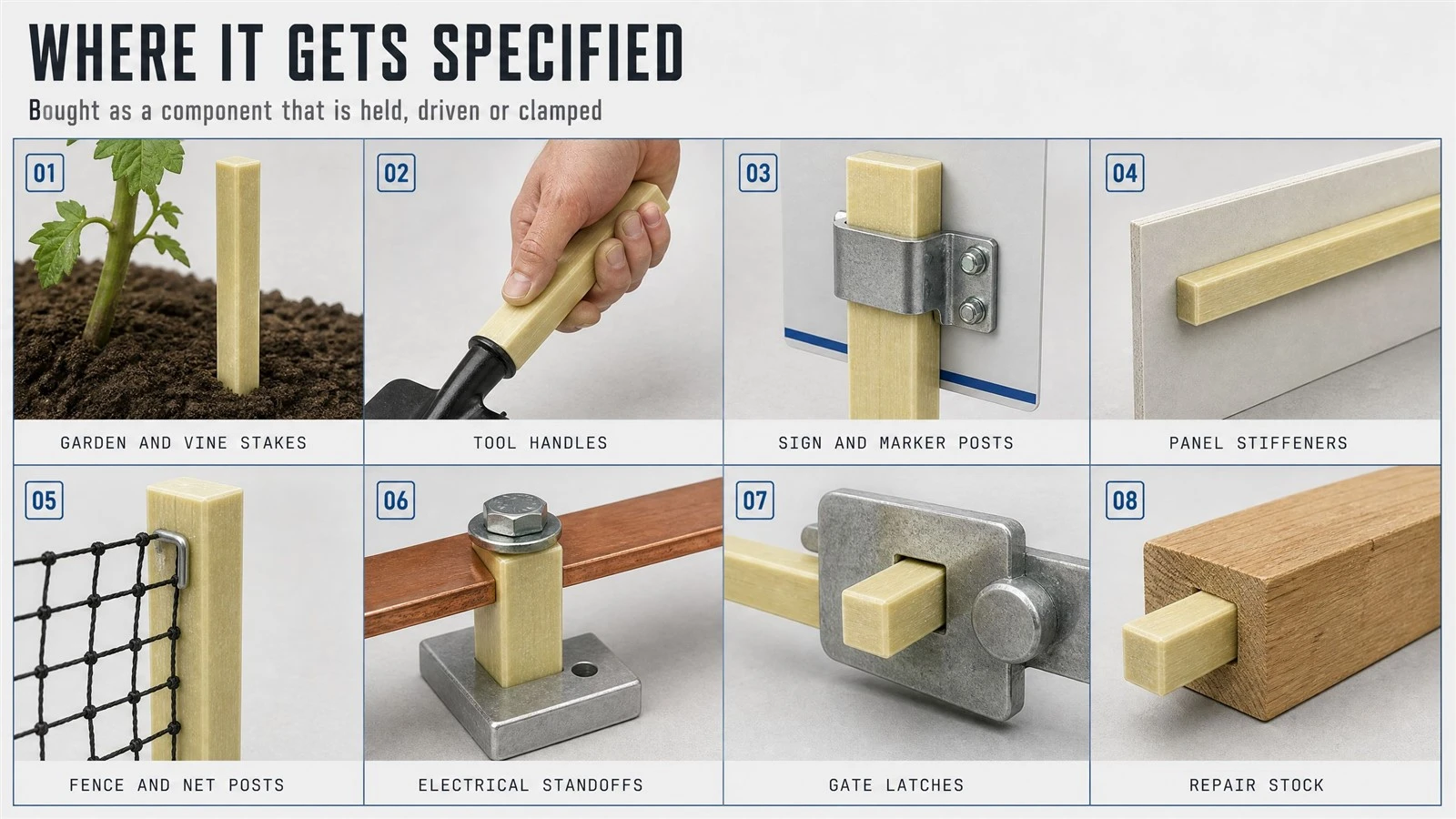
Square bar is bought as a component that has to be held, driven or clamped.
Garden, nursery and vineyard stakes
Driven into soil, will not rot, will not split at the point.
Tool handles and levers
Flat faces give grip, and the section is insulating.
Sign and marker posts
Light, and a bracket clamps the flat face without slipping.
Panel and door stiffeners
Bonded flat to a sheet, the square section adds stiffness out of plane.
Fence and netting posts
Flat faces take a staple or a clip better than a round section.
Electrical standoffs and spacers
Insulating, and the flat face seats square against a busbar.
Gate latches and bolts
Will not rotate in its holder under load.
Reinforcing and repair stock
Bonded into an existing member to add local stiffness.
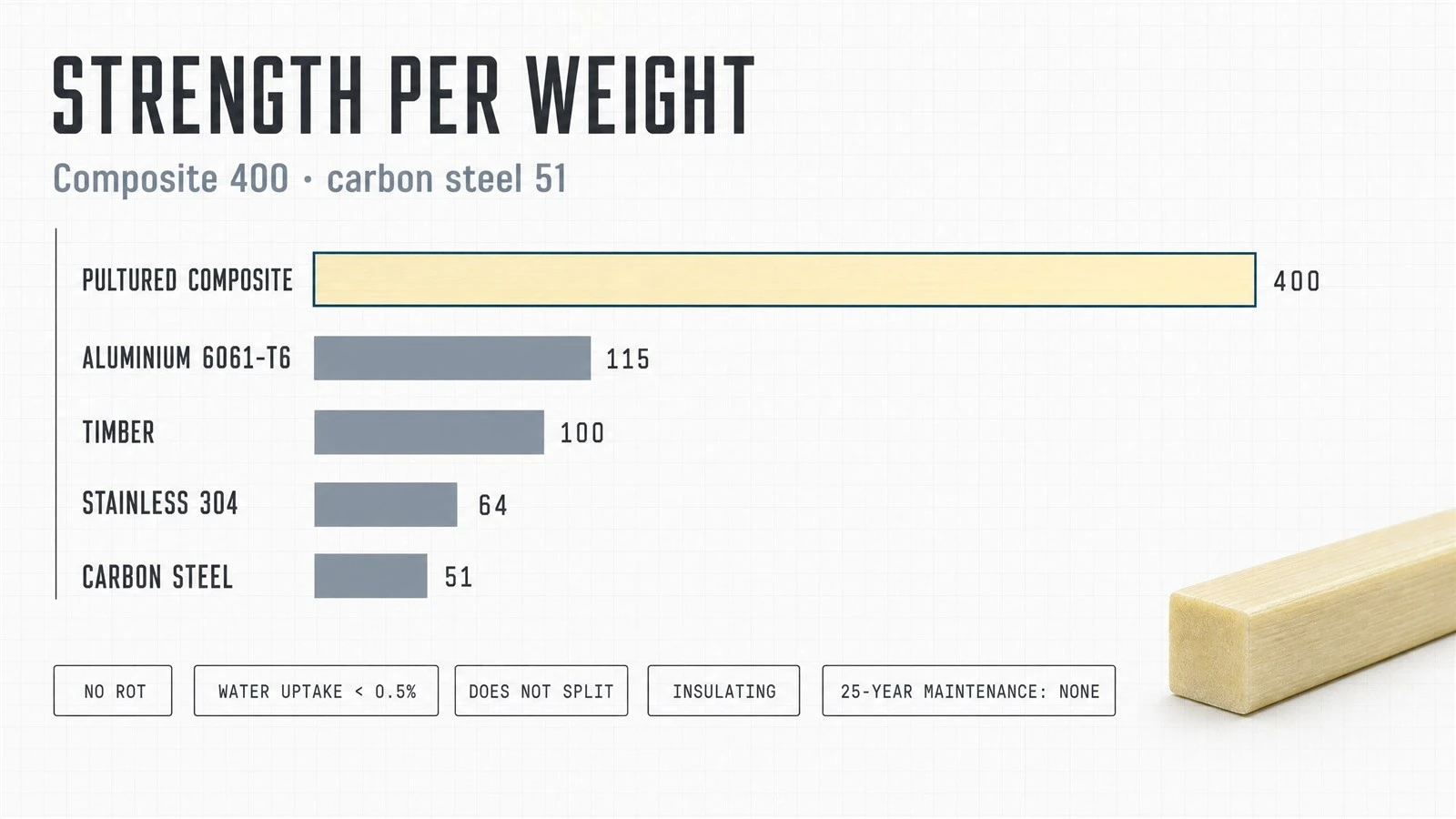
Against the metals and timber you are replacing
Square bar is most often bought to replace a wooden stake, a steel post, or steel square bar.
|
Property |
Pultruded composite |
Carbon steel |
Galvanised steel |
Stainless 304 |
Aluminium 6061-T6 |
Timber |
|
Density (g/cm³) |
1.8–2.2 |
7.85 |
7.85 |
8 |
2.7 |
0.5–0.8 |
|
Tensile strength (MPa) |
≥ 800 |
370–500 |
370–500 |
515 |
310 |
40–100 |
|
Specific strength |
≈ 400 |
≈ 51 |
≈ 51 |
≈ 64 |
≈ 115 |
≈ 100 |
|
Rot and insect attack |
No mechanism |
N/A |
N/A |
N/A |
N/A |
Yes |
|
Water absorption |
< 0.5% |
Rusts |
Rusts at cut |
None |
None |
High |
|
Splitting when driven or nailed |
Does not split |
N/A |
N/A |
N/A |
N/A |
Splits |
|
Electrical |
Insulating |
Conductive |
Conductive |
Conductive |
Conductive |
Insulating |
|
Modulus (GPa) |
≥ 40 |
~200 |
~200 |
~193 |
~69 |
8–14 |
|
Cut and drill on site |
Hand tools |
Grinder, hot work |
Grinder, re-protect |
Grinder |
Hand tools |
Hand tools |
|
Maintenance, 25 yrs |
None |
Paint |
1–2 cycles |
Low |
Oxidation control |
Replace 2–3 times |
|
Scrap value at end |
Low |
High |
High |
Very high |
High |
None |
Against timber, the argument is replacement cycles
A treated timber stake in ground contact is typically replaced two or three times over a 25-year horizon and splits when driven into hard ground. Composite does not rot, does not absorb meaningful water, and does not split at the point. On anything set in soil or exposed to weather, the comparison is not material price - it is how many times you buy and fit it.
Against steel, the argument is weight and corrosion at the cut
Steel square bar is stiffer and cheaper per metre. It also rusts at every cut end and at every drilled hole, and on a small section the cut ends are a large proportion of the surface. For a post or stake that gets cut to length on site, that is where corrosion starts.
What the others do better. Steel is far stiffer and cheaper per metre, and stainless survives anything. Timber is cheaper still, insulates just as well and is perfectly adequate for a temporary stake. And all metals carry scrap value. For a short-life application where the part is easily replaced, timber is often the right answer - we would rather you bought that than composite you do not need.
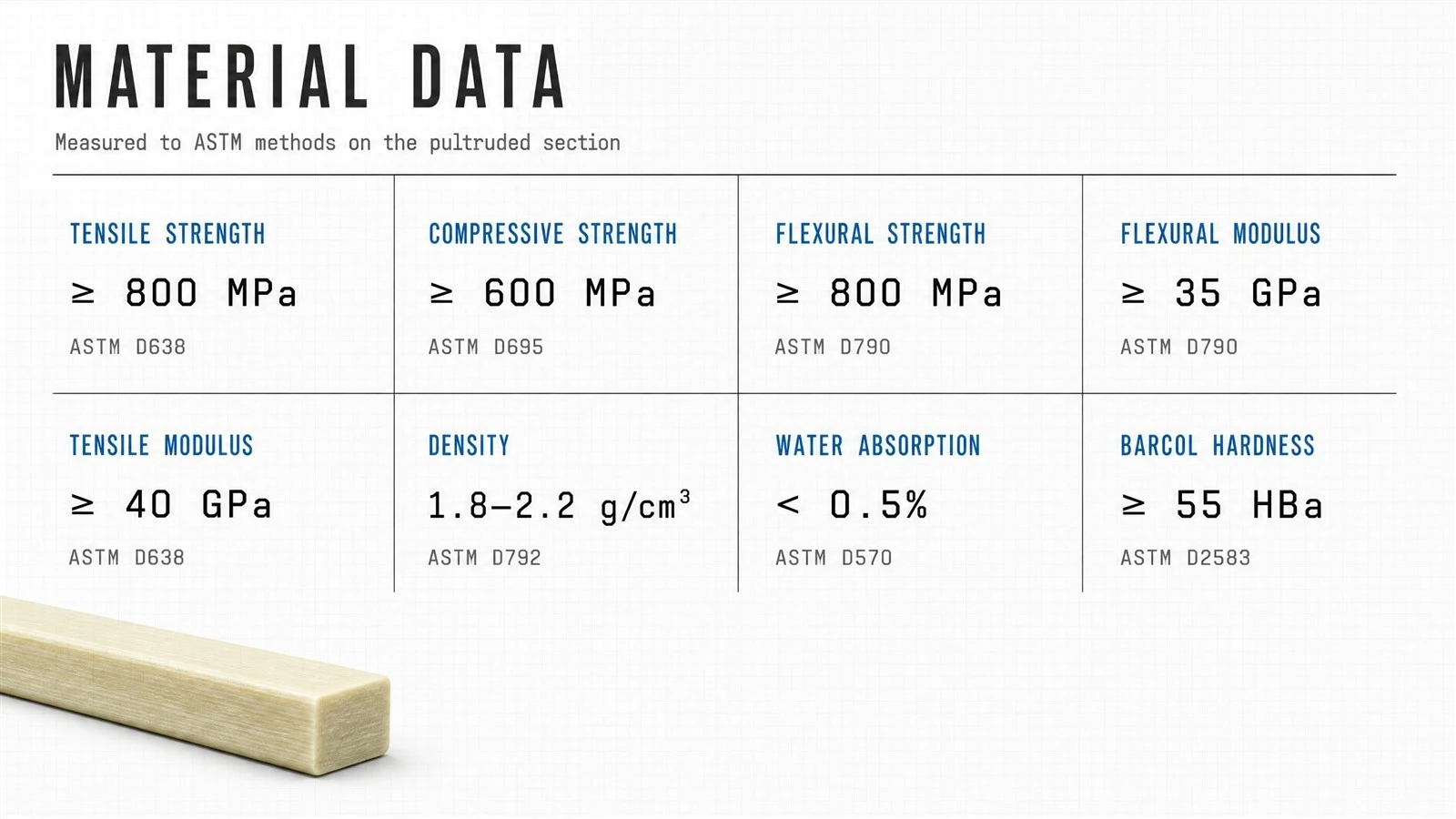
Material data
Measured to ASTM methods on the pultruded section. Values are for the composite material; section properties depend on the size you order.
| Tensile strength, longitudinal | ≥ 800 MPa · ASTM D638 | Compressive strength, longitudinal | ≥ 600 MPa · ASTM D695 |
| Tensile modulus, longitudinal | ≥ 40 GPa · ASTM D638 | Density | 1.8–2.2 g/cm³ · ASTM D792 |
| Flexural strength, longitudinal | ≥ 800 MPa · ASTM D790 | Water absorption | < 0.5% · ASTM D570 |
| Flexural modulus, longitudinal | ≥ 35 GPa · ASTM D790 | Barcol hardness | ≥ 55 HBa · ASTM D2583 |
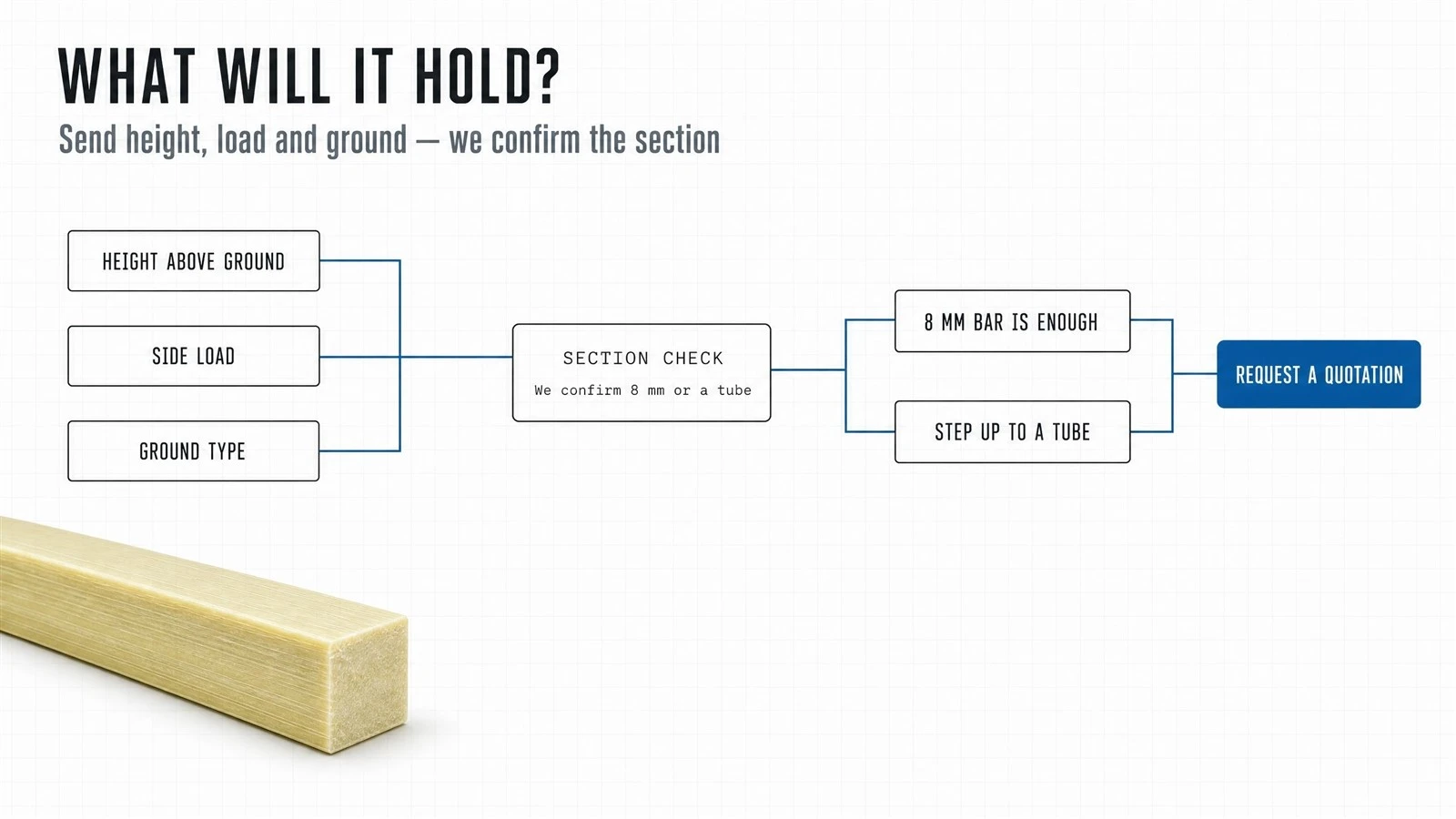
For stake and post work the governing check is usually bending at ground level, not the material strength. Send the height above ground and the side load and we will confirm whether 8 mm is enough or whether you need a tube.
Custom, cut to length, ordering
| Cut to length | ±1 mm, square cut | Standard lengths | 3 m / 6 m |
| Pointing | One or both ends pointed for driving | Tooling lead time | 4–6 weeks |
| Drilling | Cross-holes to your schedule | Custom die MOQ | 1,000 m |
| Notching and chamfering | To drawing | Samples | Free samples |
| Colour | Integral pigment, RAL matched | Certificates | ISO 9001; test reports available on request |
Production Process


FAQ
Is 8 mm big enough for a stake?
For light-duty nursery, garden and marker work, yes. For a fence post carrying real side load, probably not - at that point a rectangular or square tube gives you far more bending stiffness for the same material. Send the height above ground and the load and we will tell you which.
Do you hold a larger square section?
Not currently. Two dies, both 8 × 8 mm. A solid square die is one of the simplest to make, so if you have a running order, tooling a larger size is usually cost-effective - ask us for both the die cost and the piece price.
Can I point one end for driving?
Yes. We supply square bar pointed on one or both ends. A point cut on the diagonal drives more easily than one cut flat, and unlike timber the point will not split - though in very hard or stony ground we would still recommend a pilot hole.
Will it splinter if I drive it in?
Far less readily than timber, because the fibre runs continuously along the length. What damages it is a heavy direct blow on the end without a driving cap, which can bruise and splay the fibres. Use a cap or a block when driving.
Can I thread it?
At 8 mm, practically, no - there is not enough material. Threading works on our round rod from about 12 mm upwards. If your part needs a thread, look at rod rather than bar, or tell us the load and we will suggest a threaded insert.
Can I drill a cross-hole?
Yes. Use a sharp HSS bit at moderate speed with light feed and back the exit face with a scrap block. Keep the hole at least two diameters from the end - a cross-hole too close to an end is the most common cause of a split in small solid sections.
How does it compare with a wooden stake?
Timber is cheaper and insulates as well. Composite does not rot, does not absorb meaningful water, does not split at the point, and will typically outlast two or three replacement cycles of treated timber in ground contact. For a permanent or hard-to-replace installation composite is usually cheaper over the period. For a seasonal one, timber is fine.
Does it conduct?
No. Volume resistivity is above 1013 Ω·cm, which makes it suitable for electrical standoffs and spacers as well as for general outdoor use.

Tell us what it has to hold, or be driven into
Square bar is specified by the job at the end of it. Tell us the height, the load and the ground, and we will confirm whether 8 mm bar is right or whether a tube would serve better. If timber or steel is the sensible answer, we will say so.
Hot Tags: fiberglass square bar, China fiberglass square bar manufacturers, suppliers, factory