

Long-life fiberglass infrastructure for the systems your trains, tunnels, and highways depend on
Fixed-asset composites engineered for the conditions that destroy steel: salt spray on bridges, humidity in subway tunnels, stray current near DC traction, and the fire-safety codes that govern every modern transit project.


WHO BUYS FROM THIS CATEGORY
You are not buying a profile. You are specifying a 30-year line item on a CAPEX ledger.
Most of our transit-infrastructure buyers are not materials engineers. They are procurement officers at metro authorities, EPC sub-contractors on subway civils, and bridge-rehab program managers who need a single accountable supplier for the fiberglass elements that sit inside a larger steel-and-concrete package. The question on their desk is rarely "what is pultrusion" and almost always "who guarantees this for thirty years, who certifies it for EN 45545, and what happens if it fails inspection."
This page walks through the seven product groups Enbuss supplies into rail, metro, and highway infrastructure - what each is for, who typically specifies it, and the engineering constraint that decides whether FRP is the right choice over steel, aluminum, or concrete.
PRODUCT GROUPS
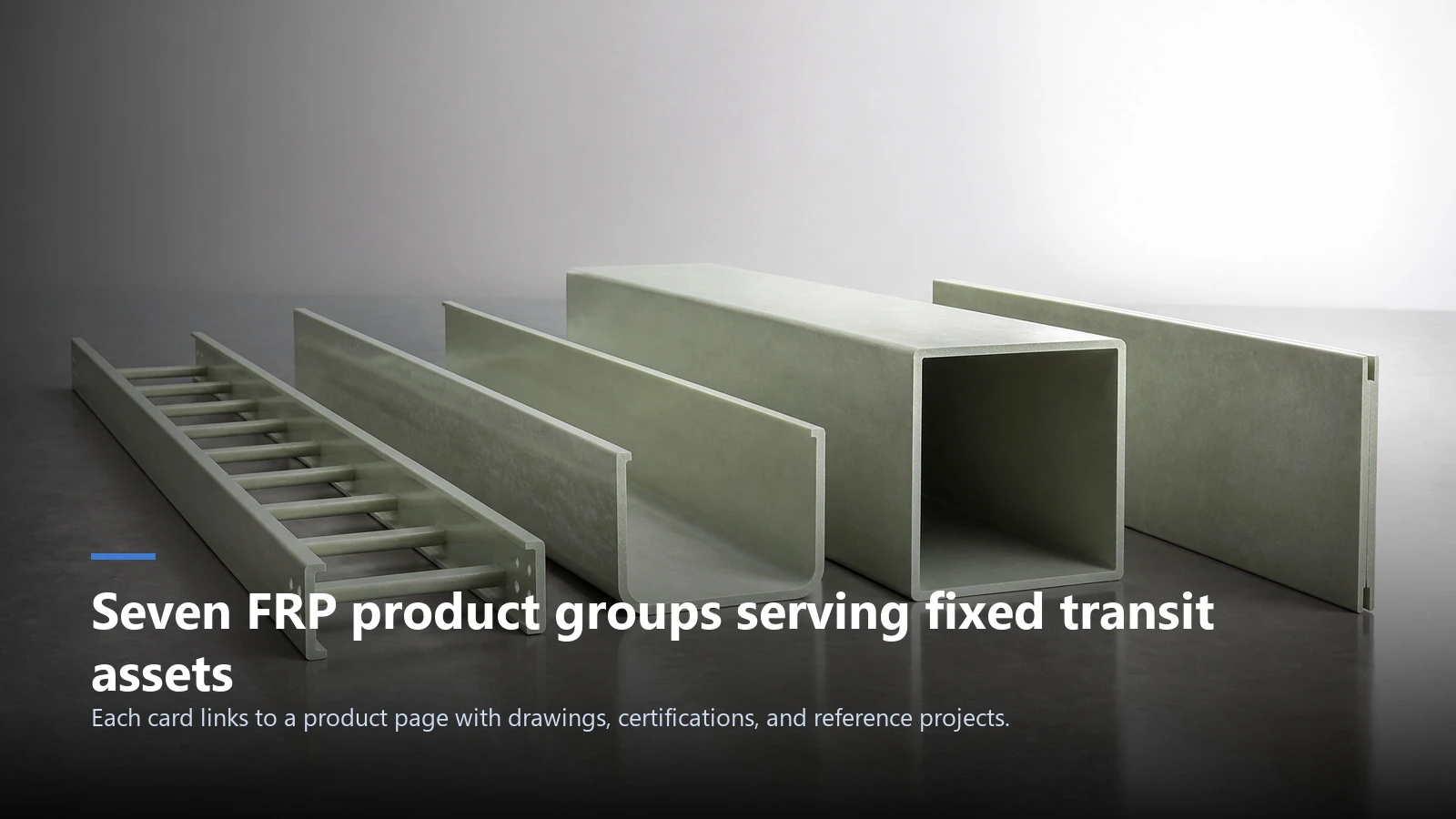
Seven FRP product groups serving fixed transit assets
Each card links to a product page with drawings, certifications, and reference projects.

Subway evacuation walkway
Side-mount FRP egress path for metro tunnels. EN 45545-2 HL2/HL3, non-conductive, installed within 600 mm of running rail.

Rail transit equipment enclosure
Weatherproof fiberglass covers for trackside electronics: signals, point machines, axle counters, JCs. UV-stabilized, IP65.

FRP cable tray for rail transit
Fiberglass ladder and trough tray for 25 kV OCS feeds and signal cables in tunnels. Non-magnetic, no eddy current, no ground loop.

FRP drainage channel for highway
Composite road gutter for bridge decks, tunnels, and salt-exposed sections. Resists chloride attack where concrete spalls.

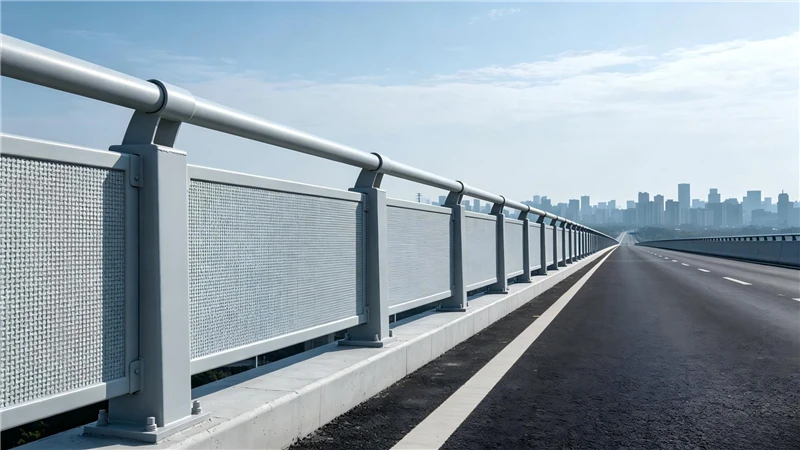
FRP bridge guardrail
Lightweight fiberglass parapet for highway and pedestrian barriers. Reduces deck dead load; eliminates painting cycles.

Third rail support bracket
Non-conductive composite insulators for 750 V DC conductor rail. Replacement for ceramic and cast-iron brackets that fail under vibration.
Third rail safety cover
Yellow fiberglass shield placed over live 750 V DC rail during maintenance. Visible warning + mechanical guard; quick clip-on.
WHY TRANSIT BUYERS MOVE FROM METAL TO FRP
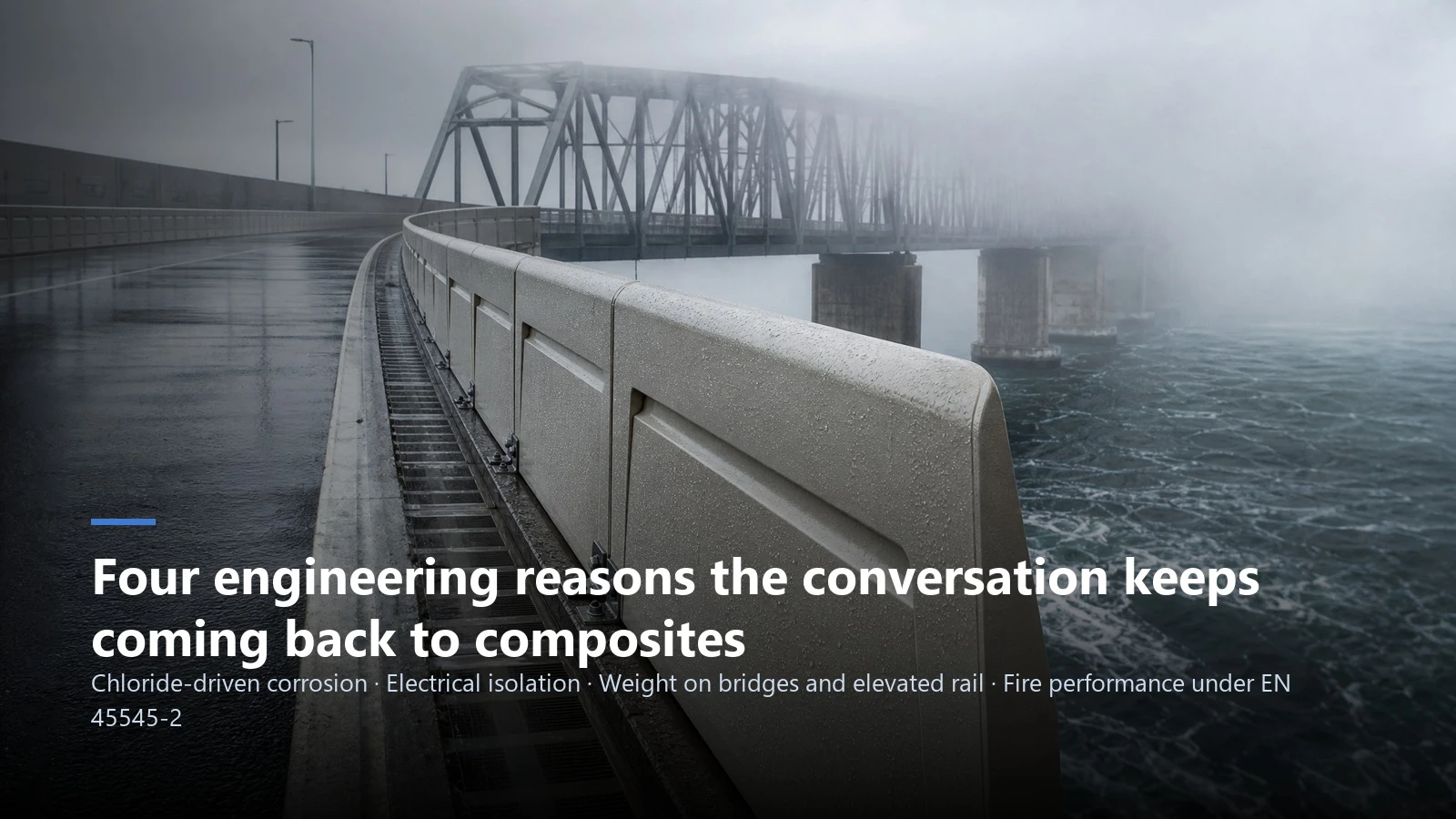
Four engineering reasons the conversation keeps coming back to composites
1. Chloride-driven corrosion
Steel guardrails and drainage on coastal or de-iced highways routinely fail within 10 years. Vinyl-ester FRP shrugs off the same chloride load for 30+ years without coating maintenance.
2. Electrical isolation
Steel cable trays in DC-traction zones create stray-current paths that eat rebar. FRP is non-conductive - no ground loops, no eddy currents, no incentive for current to leave the rail and find ground through your cable support.
3. Weight on bridges and elevated rail
A composite guardrail at 12 kg/m versus a steel one at 38 kg/m trims deck dead load. Over a 4 km viaduct that is hundreds of tonnes of structural demand that the engineer can spend on span instead.
4. Fire performance under EN 45545-2
Modern metro and mainline rail projects require hazard levels HL1–HL3. Properly formulated phenolic and fire-retardant vinyl-ester pultrusions clear HL3 with low smoke and low toxicity - a result that simply is not possible with unprotected aluminum.
MATERIAL DECISION
Where each common material wins - and where FRP wins against it
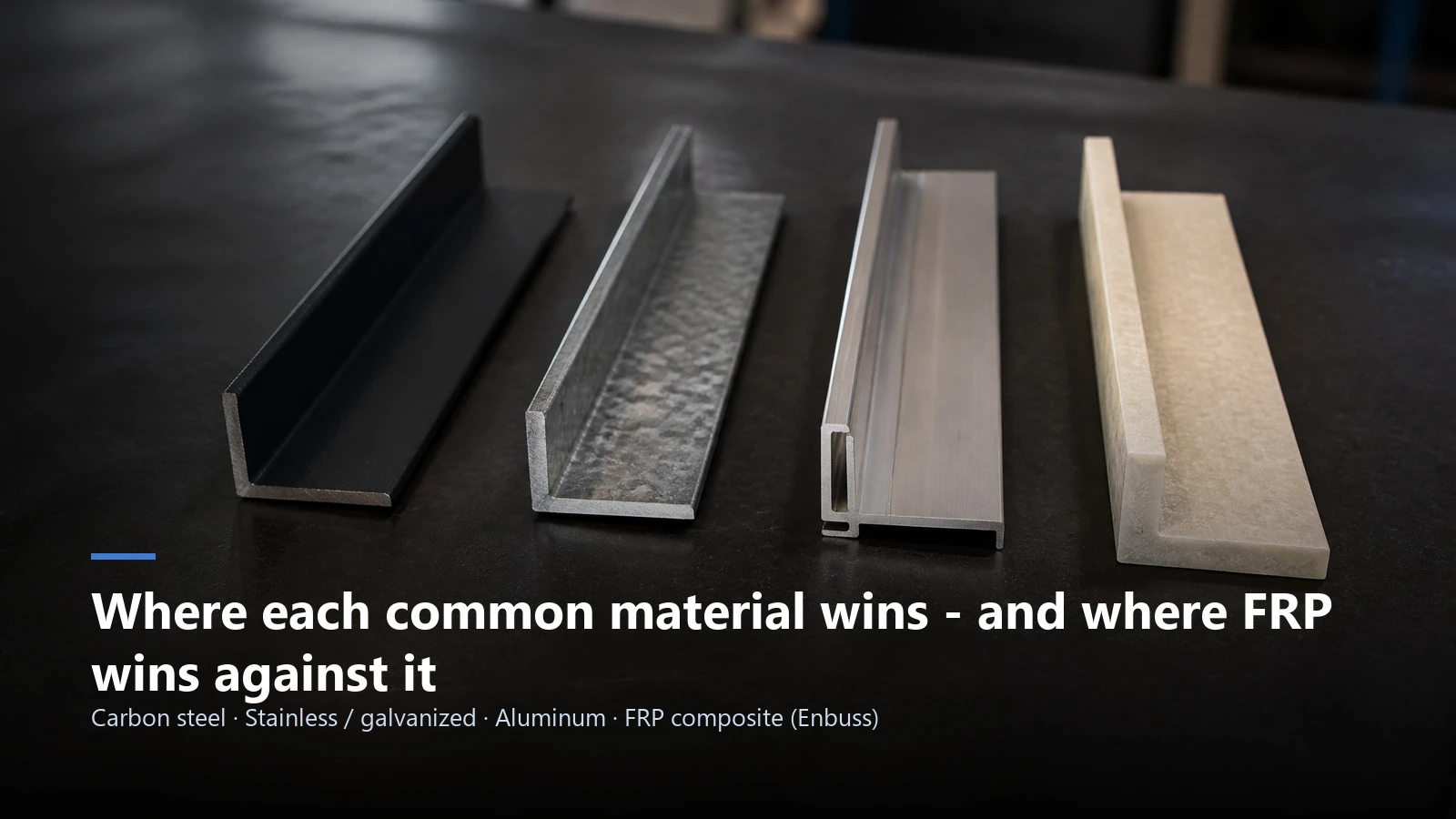
We do not pretend FRP is the right material for every clause. The table below shows what each option does best. If the table tells you a steel guardrail is correct for your project, take that - we will not chase an order we cannot justify.
|
Application |
Carbon steel |
Stainless / galvanized |
Aluminum |
FRP composite (Enbuss) |
|
Bridge parapet / guardrail |
Strong, but painted every 6–8 years |
Longer intervals, heavy, expensive |
Light, but low impact tolerance |
Lightweight, paint-free, 30-yr design life |
|
Tunnel cable support |
Stray-current corrosion risk |
Costly to fully isolate |
Light, acceptable |
Non-conductive, no ground path |
|
Third rail support bracket |
Requires separate insulator |
Same |
Conductive - unsafe |
Insulator and structure in one part |
|
Evacuation walkway in tunnel |
Heavy, conductive, requires bonding |
Heavy, costly |
Conductive near 750 V DC rail |
Non-conductive, low mass, EN 45545-capable |
|
Drainage on bridge deck |
Cuts and welds, then corrodes at joints |
Better, expensive |
Galvanic issues with rebar |
Monolithic profile, chloride-resistant |
|
Trackside equipment cover |
Rusts, blocks RF |
- |
Light, RF-transparent |
RF-transparent, UV-stable, no painting |
Production Process


WHO WE WORK WITH
The buyers we are set up to serve
This is fixed-asset FRP, not vehicle-part FRP. If your program is a moving vehicle we will refer you to the right pultruder; if it is the track the vehicle runs on, the tunnel it runs through, or the bridge it crosses, you are in the right category.
METRO AUTHORITIES
Asset renewal on aging subway systems; HL-rated walkway and cable-support packages on greenfield extensions.
HIGHWAY AUTHORITIES
Bridge-rehab and new elevated corridor programs needing chloride-proof drainage and parapet.
EPC FIRMS
Subcontracted composite supply for rail electrification, signaling, and corridor civil works.
SYSTEM INTEGRATORS
Third-rail power, OCS, and trackside-electronics contractors seeking pre-engineered kit of parts.
CONTRACTORS
Bridge and tunnel general contractors needing a package with documentation, not a quote on a single SKU.
O&M TEAMS
Operations and maintenance groups specifying replacements for failed ceramic insulators and rusted steel.
STANDARDS AND CERTIFICATIONS
Documented against the codes your inspector will actually ask for
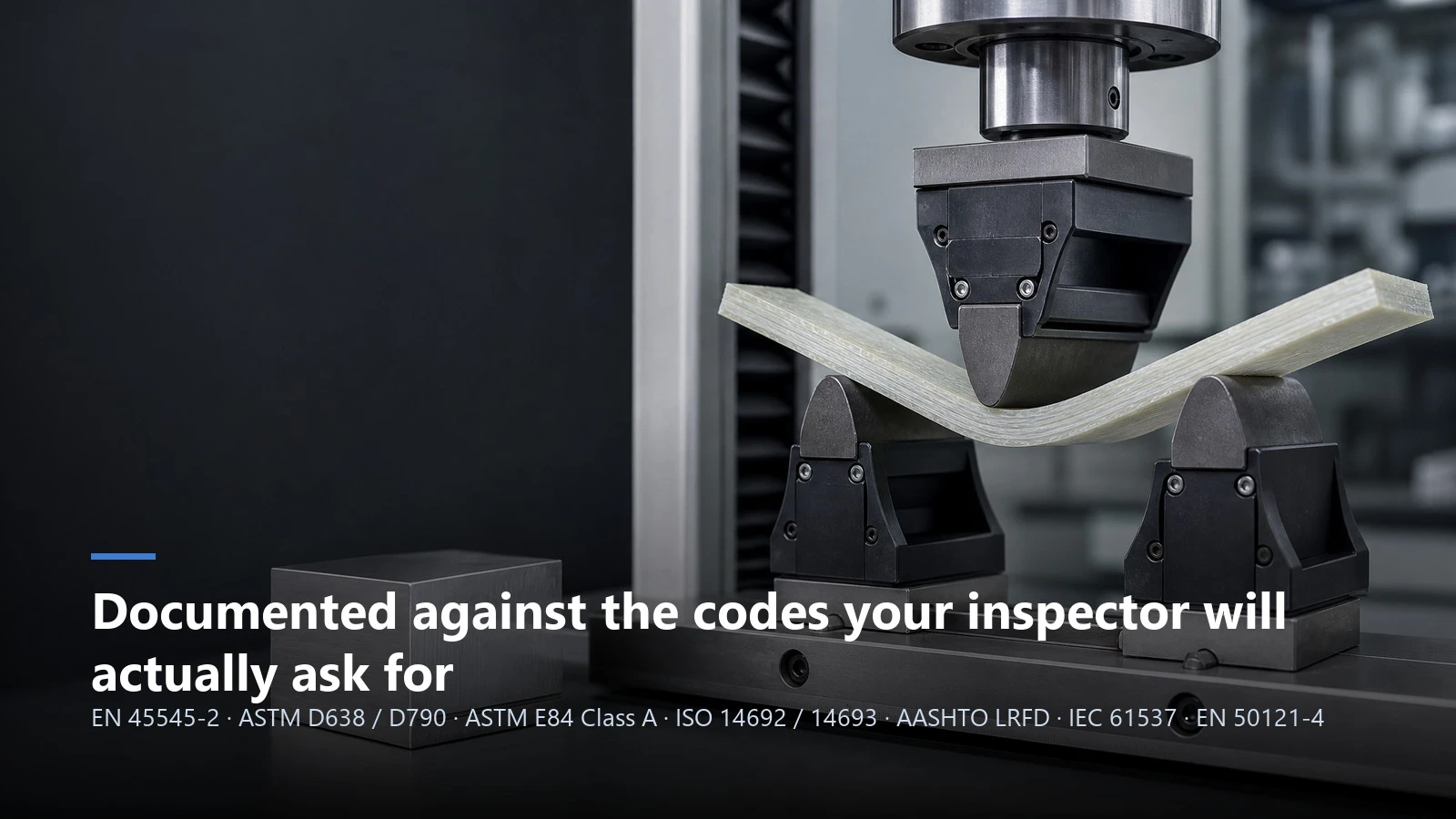
Specifying FRP is easier when the paperwork is already in the binder. Enbuss pultrusions in this category are formulated and tested against the rail and infrastructure standards below. Project-specific certificate copies are issued per PO.
|
Standard |
What it covers |
Where it applies in this category |
|
EN 45545-2 HL2 / HL3 |
Fire safety on railway vehicles and fixed installations |
Evacuation walkways; tunnel cable trays; third-rail covers |
|
ASTM D638 / D790 |
Tensile and flexural properties of composites |
All structural pultrusions |
|
ASTM E84 (Class A) |
Surface flame spread for transit interiors |
Walkways, covers, enclosures |
|
ISO 14692 / 14693 |
Fiberglass-reinforced plastics for pressure piping |
Drainage channels; cable trough |
|
AASHTO LRFD |
Bridge design loads (composite parapet referenced) |
Bridge guardrail / pedestrian rail |
|
IEC 61537 |
Cable tray systems and ladder standards |
FRP cable ladder and trough |
|
EN 50121-4 |
EMC for signaling and telecommunications apparatus |
Trackside equipment enclosures (RF-transparent) |
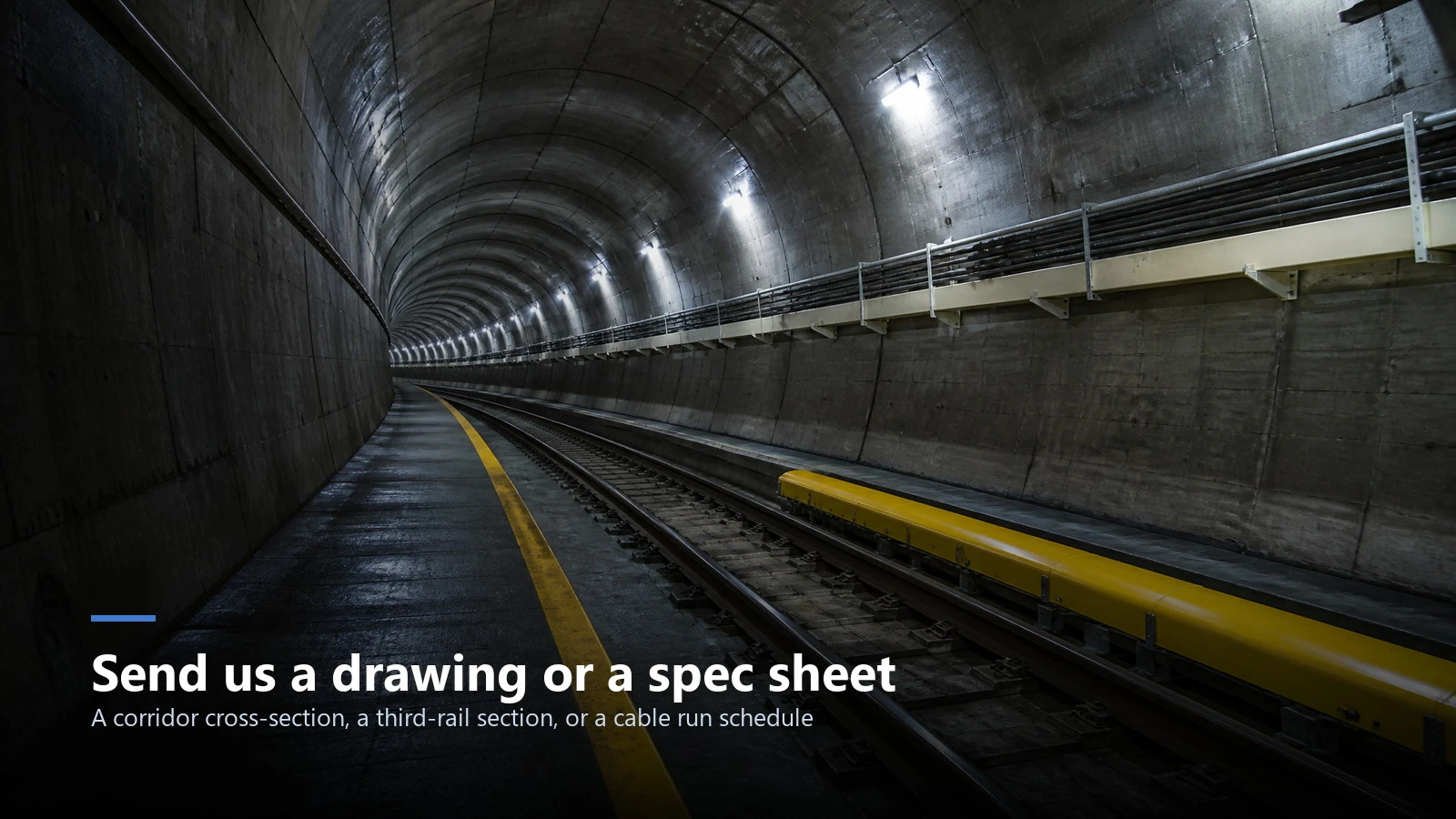
Send us a drawing or a spec sheet
Send a corridor cross-section, a third-rail section, or a cable run schedule. We come back with a kit-of-parts proposal, fixed lead time, and the certification pack needed to pass your next-gate review.