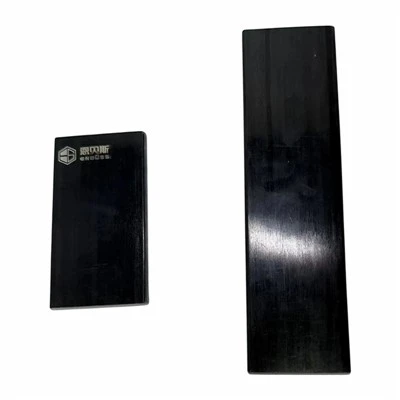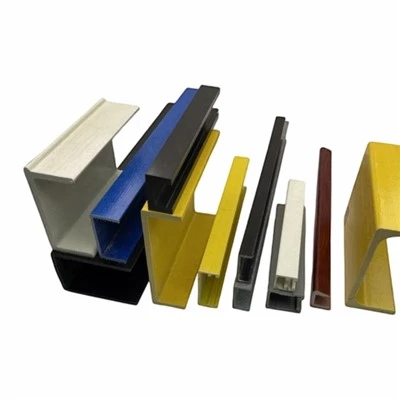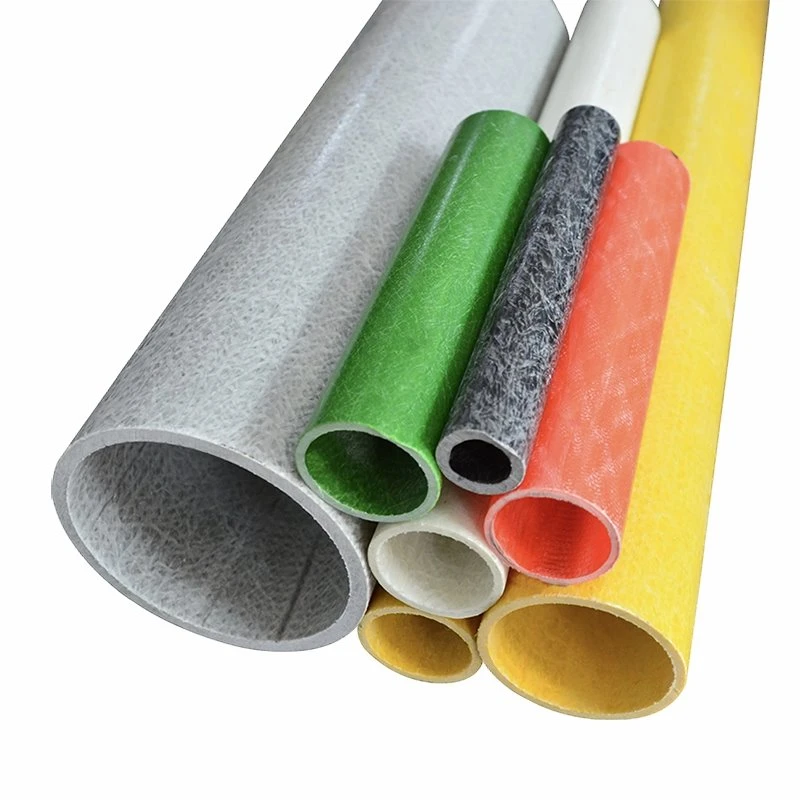


Henan Enbuess Composite Materials Co., Ltd. is one of the leading manufacturers and suppliers of fiberglass round tube in China. We are committed to providing high quality customized service for global clients. If you're going to buy high strength fiberglass round tube made in China, welcome to get free sample from our factory.
Standard sizes
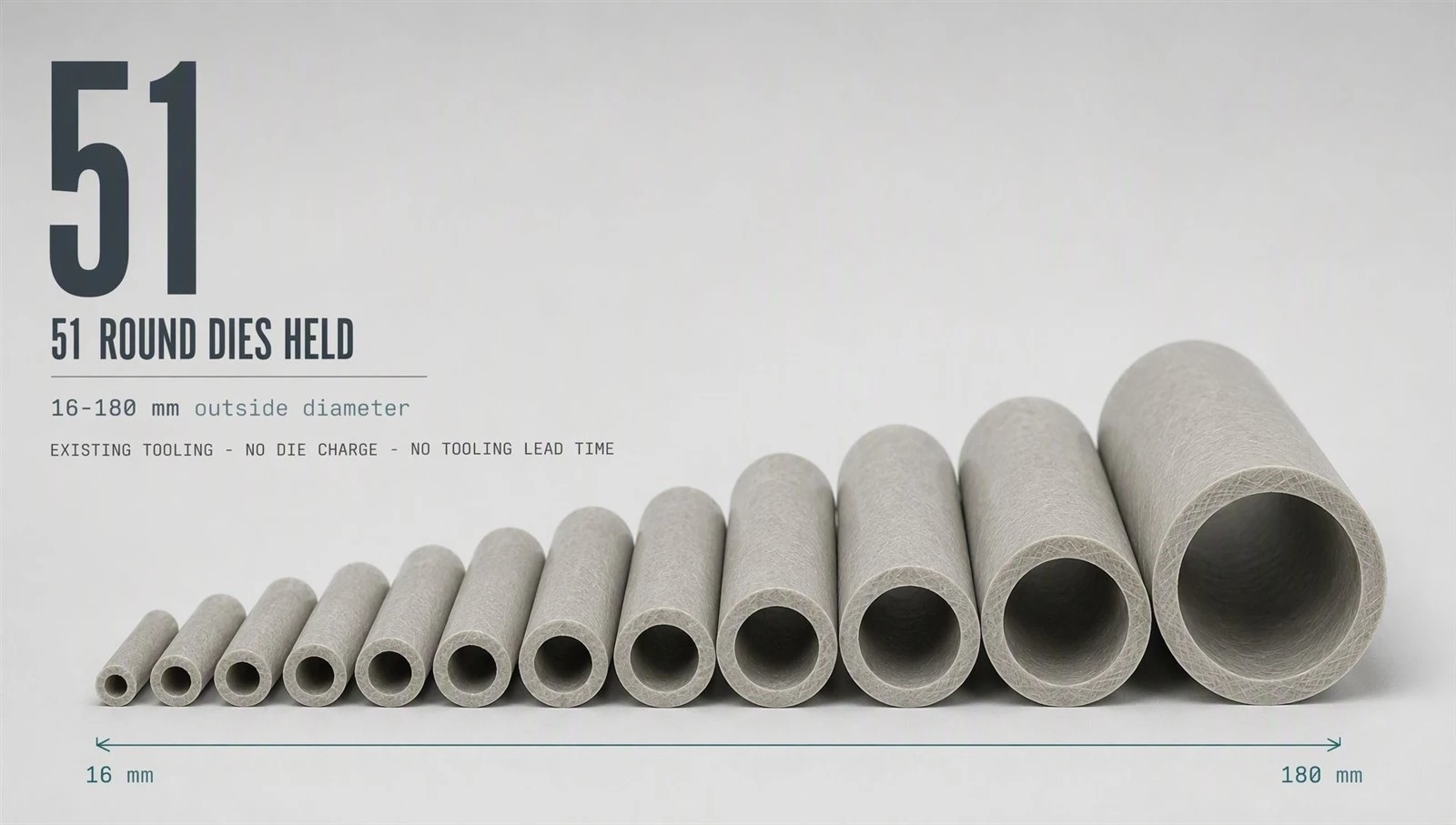
Every row runs on tooling we already hold - no die charge, no tooling lead time. Wall thicknesses marked + walls mean further dies exist at that outside diameter.
|
OD × wall (mm) |
Weight (kg/m) |
Tooling |
|
16 × 3 |
0.25 |
Existing |
|
18 × 4 |
- |
Existing |
|
19 × 3 |
0.32 |
Existing |
|
20 × 3 |
0.31 |
Existing |
|
25 × 3 |
0.43 |
Existing |
|
25 |
- |
Existing + walls |
|
30 × 2 |
0.37 |
Existing |
|
30 × 3 |
0.5 |
Existing |
|
30 |
- |
Existing + walls |
|
32 × 3 |
0.56 |
Existing |
|
32 × 3.5 |
0.63 |
Existing |
|
32 × 4 |
0.76 |
Existing |
|
32 × 5 |
0.87 |
Existing |
|
32 |
- |
Existing + walls |
|
36 × 3 |
0.61 |
Existing |
|
38 × 5 |
1.1 |
Existing |
|
40 × 3 |
0.72 |
Existing |
|
40 × 4 |
0.94 |
Existing |
|
40 × 5 |
1.13 |
Existing |
|
40 |
- |
Existing + walls |
|
43 × 5 |
1.25 |
Existing |
|
46.5 × 4 |
1.1 |
Existing |
|
48 × 7 |
1.82 |
Existing |
|
50 × 3 |
0.92 |
Existing |
|
50 × 4 |
1.24 |
Existing |
|
50 × 5 |
1.45 |
Existing |
|
50 |
- |
Existing + walls |
|
56 |
- |
Existing + walls |
|
59 × 4 |
1.35 |
Existing |
|
60 × 4 |
1.42 |
Existing |
|
60 × 5 |
1.77 |
Existing |
|
65 |
- |
Existing + walls |
|
68 × 4 |
1.75 |
Existing |
|
70 × 6 |
2.48 |
Existing |
|
76 × 3 |
1.34 |
Existing |
|
76 × 6.5 |
2.9 |
Existing |
|
80 × 3 |
1.32 |
Existing |
|
80 × 4 |
2.05 |
Existing |
|
89 × 3.5 |
1.86 |
Existing |
|
100 × 6 |
3.57 |
Existing |
|
110 × 3 |
2.16 |
Existing |
|
115 × 5 |
4.6 |
Existing |
|
142 × 5 |
4.4 |
Existing |
|
160 × 5 |
- |
Existing |
|
170 × 10 |
10.02 |
Existing |
|
180 × 9.5 |
10.17 |
Existing |
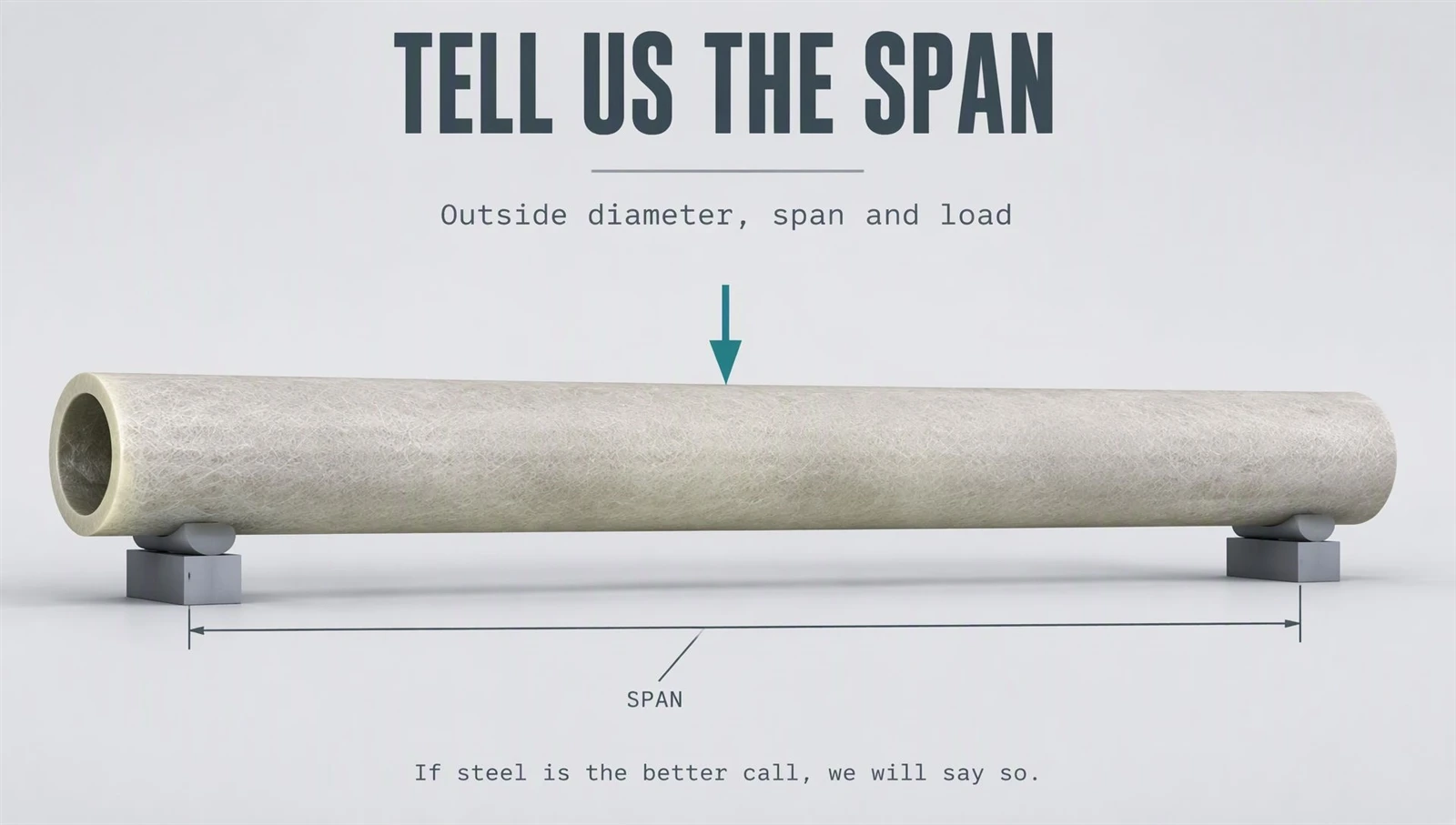
Section properties - second moment of area and section modulus - are calculated for the size and wall you order and supplied with the quotation. We do not publish a generic table, because the figure changes with the wall you actually buy.
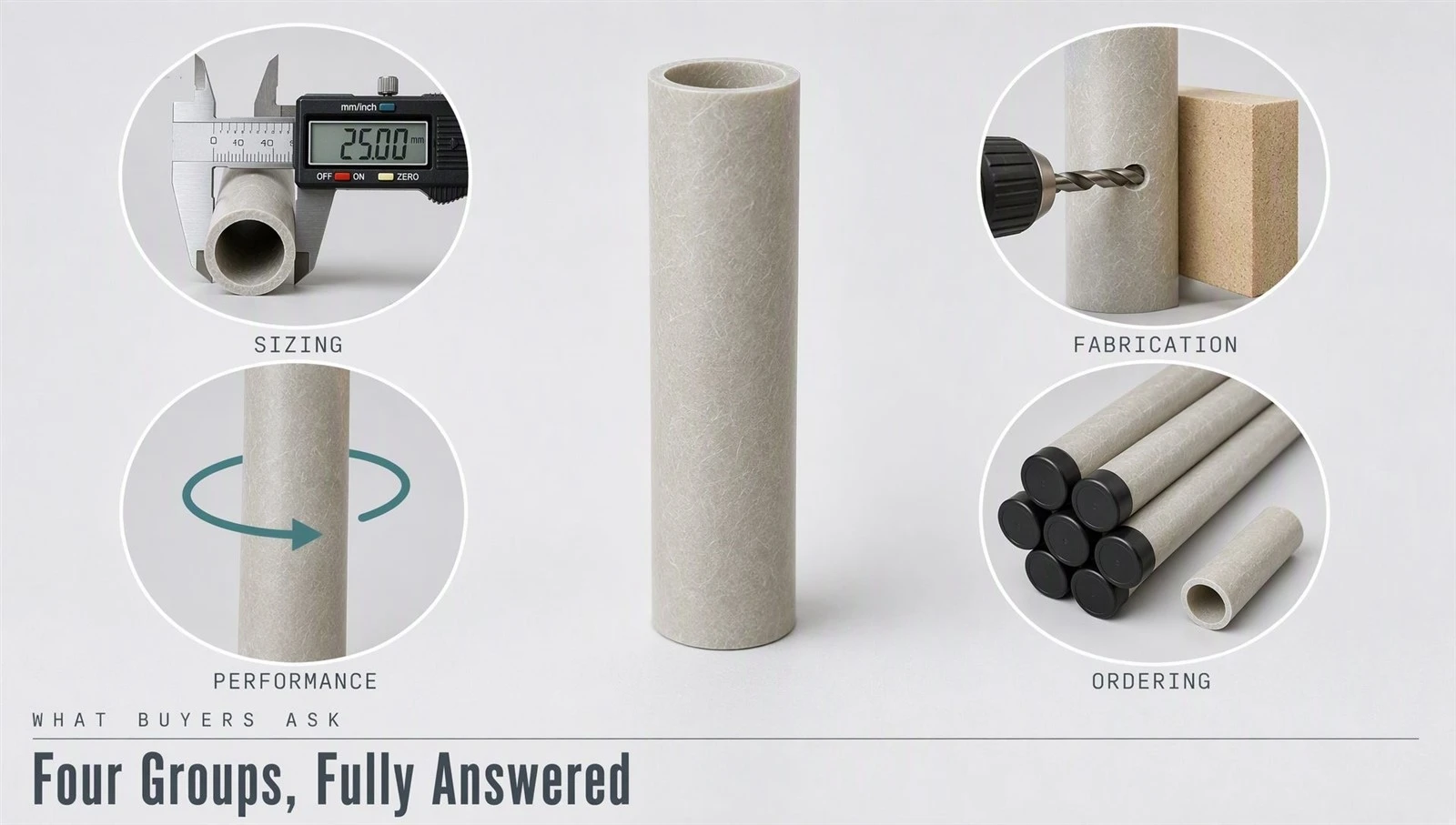
What buyers ask about this profile
Four groups. Each one is answered on this page.
Sizing
What outside diameter do I need for a handrail
Is my size held or does it need a die
What is the straightness tolerance
How much does it weigh per metre
Fabrication
Can it be bent into a curve
What is the minimum bend radius
How do I join two lengths
Will it split when I drill it
Performance
How much twist does it take
Will it sag over a long span
Does it go brittle in the cold
Does the surface fray after a few summers
Ordering
How does it compare with stainless handrail tube
Can I get a sample length
Do you supply test certificates
What is the MOQ on a custom die

Why a round section
Three properties that come from the shape itself, not from the material.
|
It behaves the same in every direction |
|
A square or rectangular tube has a strong axis and a weak one - rotate it 90° and the stiffness changes. A round tube does not. If your load direction is uncertain, or the member will be rotated during installation, or it is a mast picking up wind from any bearing, that removes a variable from the design. It also removes an installation error: there is no way to fit a round tube the wrong way round. |
|
Closed section means real torsional stiffness |
|
Twist resistance comes from a closed perimeter. A round tube is the most efficient closed shape there is. Open sections - channel, angle, flat bar - resist twist with roughly one hundredth of the stiffness of a closed tube of similar size. Wherever a member sees torque rather than pure bending, round tube is the honest answer. |
|
The shape a hand expects |
|
This sounds minor until you specify a handrail. A round section has no edge to press into a palm, it does not collect water on a flat top, and it is the profile every handrail fitting, saddle clamp and end cap on the market is already designed around. It also bends: with heat, pultruded round tube can be formed into curves for arched greenhouse hoops and curved rail runs, which no open section does cleanly. |
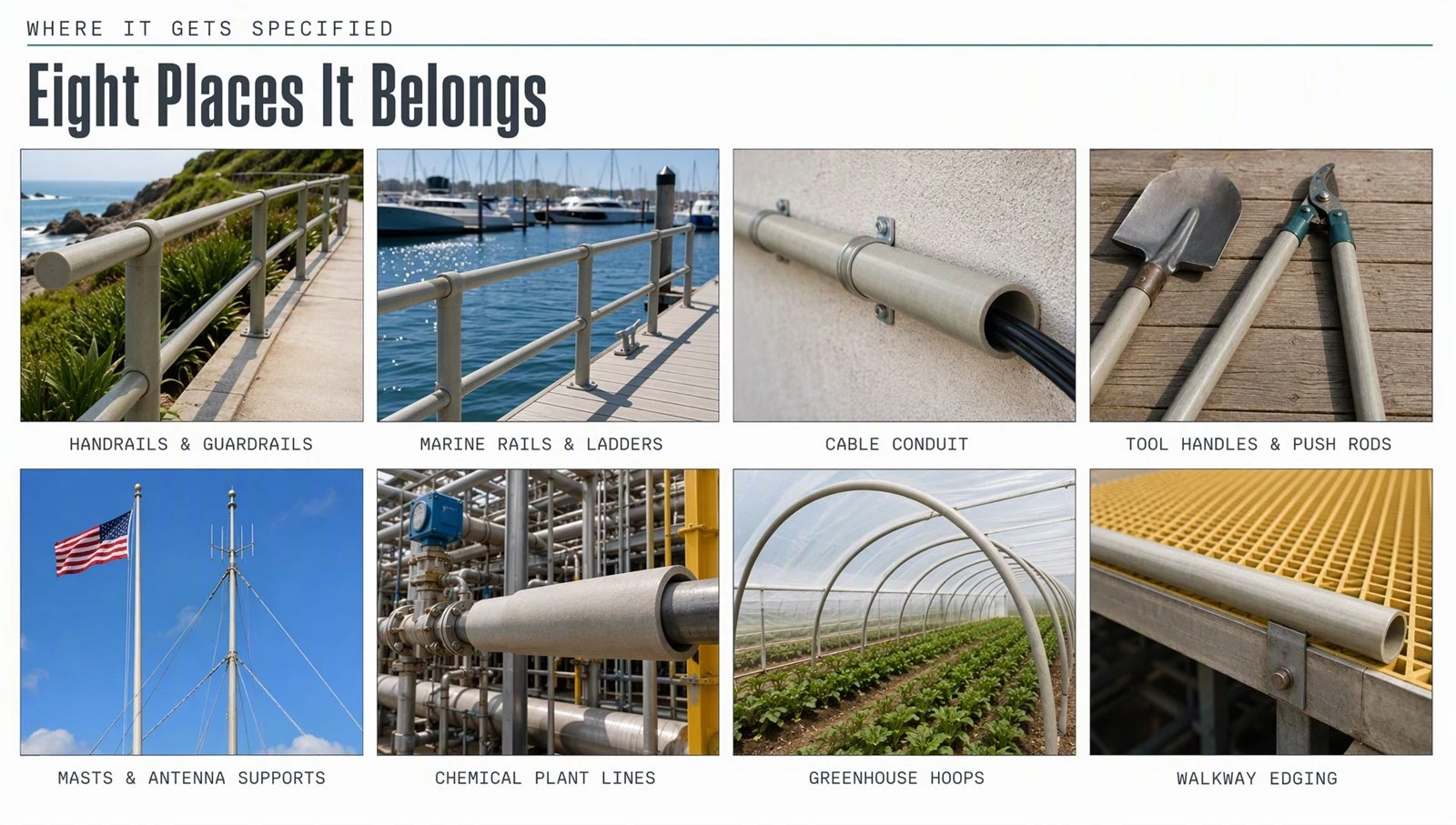
Where it gets specified
Applications where a closed round section is the right shape rather than merely an available one.
Handrails and guardrails
The default profile. No sharp edge, standard fittings, and no earthed metal near walkways.
Marine rails and boarding ladders
Salt spray with no coating to maintain, and warm to the hand in cold weather.
Cable conduit and protective sleeving
Closed section protects the run, and the bore stays smooth because there is no internal corrosion.
Tool handles and push rods
Insulating, light, and does not transmit cold the way metal does.
Masts, flagpoles and antenna supports
Load comes from any direction, and non-conductivity matters near RF.
Chemical plant service lines
Where a metal sleeve would corrode from the outside in and seize the line inside.
Greenhouse hoops and arched structures
Heat-formable into curves, and no rust staining down the glazing.
Walkway and platform edging
Closed section takes the knock that would dent an open profile.
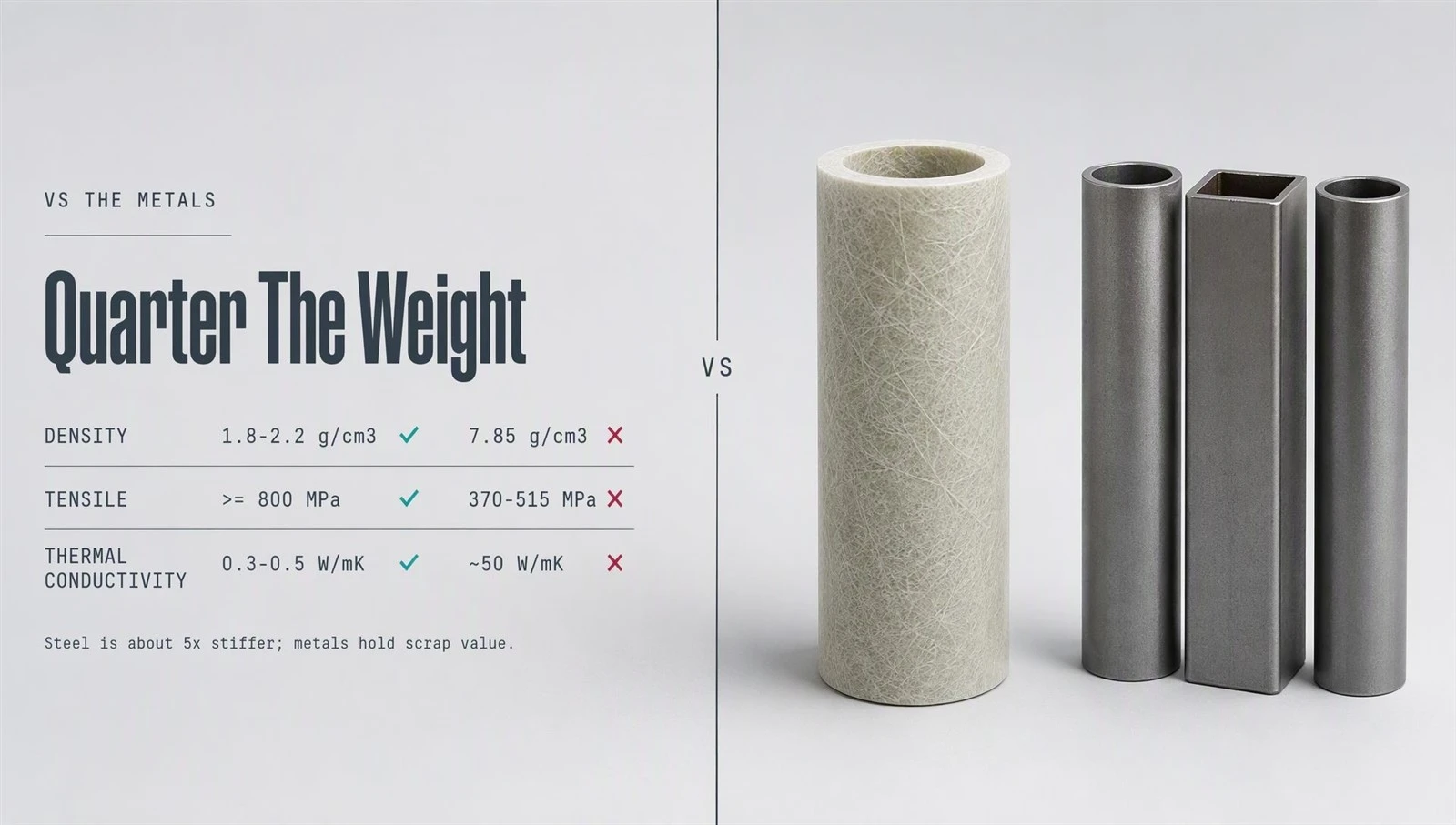
Against the metals you are replacing
Round tube is most often bought to replace stainless handrail tube, galvanised conduit, or aluminium mast.
|
Property |
Pultruded composite |
Carbon steel |
Galvanised steel |
Stainless 304 |
Stainless 316 |
Aluminium 6061-T6 |
|
Density (g/cm³) |
1.8–2.2 |
7.85 |
7.85 |
8 |
8 |
2.7 |
|
Tensile strength (MPa) |
≥ 800 |
370–500 |
370–500 |
515 |
515 |
310 |
|
Specific strength |
≈ 400 |
≈ 51 |
≈ 51 |
≈ 64 |
≈ 64 |
≈ 115 |
|
Torsional stiffness |
Closed section, high |
Closed, high |
Closed, high |
Closed, high |
Closed, high |
Closed, high |
|
Modulus (GPa) |
≥ 40 |
~200 |
~200 |
~193 |
~193 |
~69 |
|
Salt / chloride |
No mechanism |
Rusts through |
Zinc gone in 2–3 yrs |
Pitting, SCC |
Good |
Pitting |
|
Internal bore corrosion |
No mechanism |
Rusts unseen |
Rusts at welds |
Generally sound |
Sound |
Generally sound |
|
Thermal conductivity (W/m·K) |
0.3–0.5 |
~50 |
~50 |
~16 |
~16 |
~167 |
|
Touch temperature in cold |
Warm |
Cold |
Cold |
Cold |
Cold |
Very cold |
|
Electrical |
Insulating |
Conductive |
Conductive |
Conductive |
Conductive |
Conductive |
|
Maintenance, 25 yrs |
None |
Paint 3–4 times |
1–2 times |
Inspect in chloride |
Low |
Oxidation control |
|
Scrap value at end |
Low |
High |
High |
Very high |
Very high |
High |
Where the handrail argument usually turns
Stainless handrail tube is normally specified in 304 because 316 is expensive. In chloride exposure - coastal, de-icing salt, pool plant, much chemical works - 304 pits and can suffer stress corrosion cracking. It is an indoor grade. Composite has no chloride mechanism and lands near 304 on material cost rather than near 316. On a handrail, the thermal conductivity row matters more than it looks: aluminium at 167 W/m·K pulls heat out of a hand on a cold morning, composite at 0.3–0.5 does not.
The one that catches people out
Galvanised conduit rusts from the inside. Condensation collects in the bore, the zinc there is consumed first, and the rust that forms narrows the bore and damages whatever is pulled through it. Nobody sees it until a cable jams. A composite conduit has no internal corrosion mechanism at all.
What the metals do better. Stiffness - steel is around five times stiffer, so a long unsupported span needs a bigger composite section or a closer support. Temperature: stainless and steel work well above the 100 °C ceiling of standard resin systems. And every metal here has scrap value at end of life while composite does not.
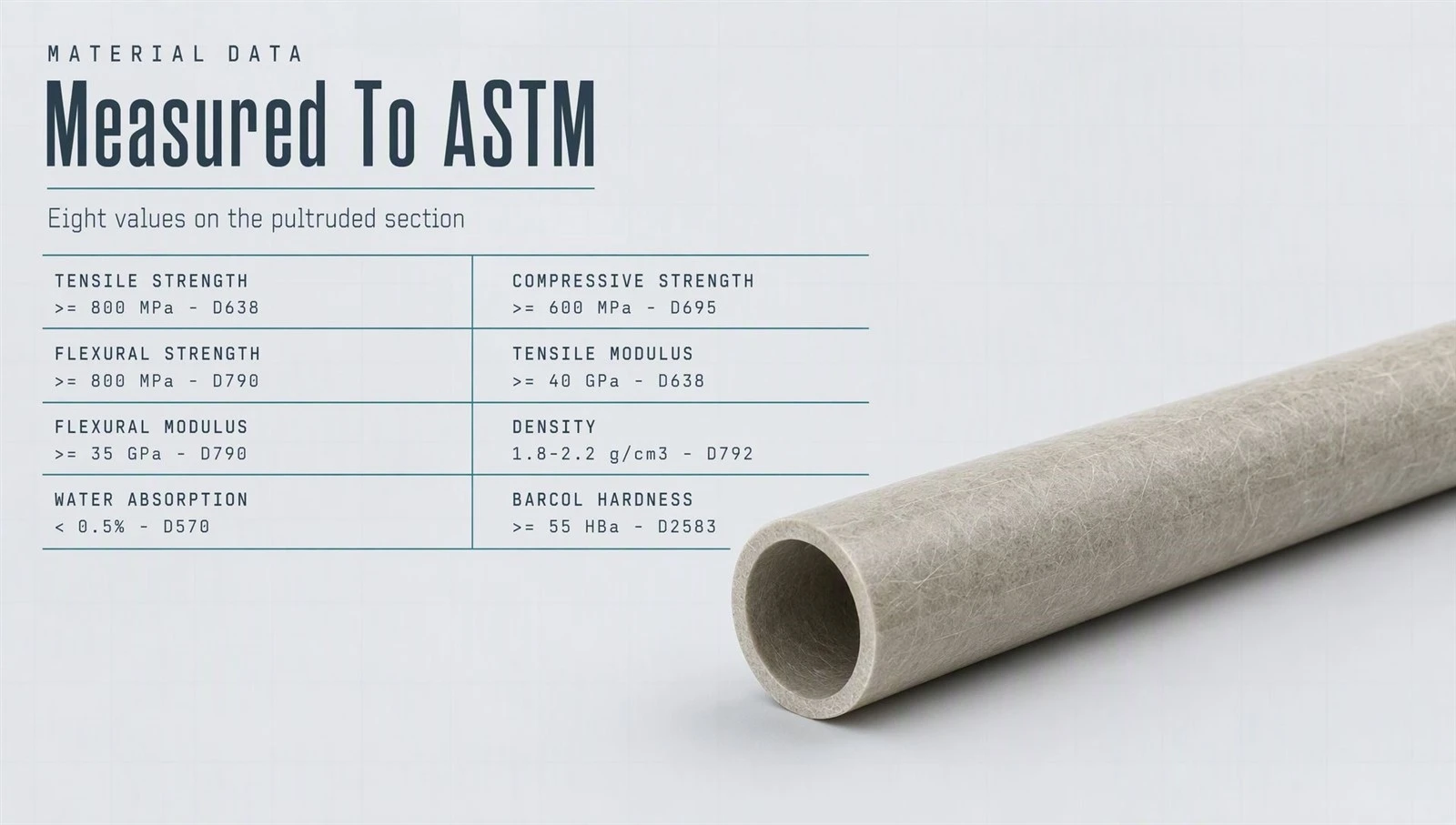
Material data
Measured to ASTM methods on the pultruded section. Values are for the composite material; section properties depend on the size you order.
| Tensile strength, longitudinal | ≥ 800 MPa · ASTM D638 | Compressive strength, longitudinal | ≥ 600 MPa · ASTM D695 |
| Tensile modulus, longitudinal | ≥ 40 GPa · ASTM D638 | Density | 1.8–2.2 g/cm³ · ASTM D792 |
| Flexural strength, longitudinal | ≥ 800 MPa · ASTM D790 | Water absorption | < 0.5% · ASTM D570 |
| Flexural modulus, longitudinal | ≥ 35 GPa · ASTM D790 | Barcol hardness | ≥ 55 HBa · ASTM D2583 |
The eight values above are material properties measured on the pultruded section. What your structure actually does depends on the second moment of area of the size you order - which we calculate per order rather than publish as a generic table.
Custom, cut to length, ordering
| Cut to length | ±1 mm, square cut | Standard lengths | 3 m / 6 m |
| Bending | Heat-formed curves to your radius | Tooling lead time | 4–6 weeks |
| Fabrication | Drilling, slotting, notching, end caps | Custom die MOQ | 1,000 m |
| Surface | Smooth, or gritted for grip | Samples | Free samples |
| Colour | Integral pigment, RAL matched | Certificates | ISO 9001; test reports available on request |
Production Process


FAQ
What size do I need for a handrail?
Most handrail work sits between 32 mm and 50 mm outside diameter, with 3–5 mm wall. The governing check is usually deflection at the mid-span between posts rather than strength - with a modulus around a fifth of steel's, a composite rail deflects more at the same section. Send us the post spacing and we will size it.
Can it be bent into a curve?
Yes, with heat. Pultruded round tube can be formed into curves for arched hoops and curved rail runs. The minimum radius depends on the diameter and wall - as a rough guide, thin-wall large-diameter tube bends more readily than thick-wall small-diameter. Tell us the radius you need and we will confirm whether it is formable or whether the run should be built from mitred straight sections.
How do I join two lengths?
Three routes. Internal splice: a short length of tube or a moulded insert bonded inside the bore, which keeps the outside smooth - the usual choice for handrails. Mechanical: through-bolting with a backing plate, or a compression coupling. Adhesive: two-part epoxy or MMA on a prepared surface. For handrail runs the internal splice is normally what you want, because there is no visible fastener and nothing to catch a hand.
Will it split when I drill it?
Heavy feed splits the far wall. Use a sharp HSS bit at moderate speed with light feed, and back the exit face with a scrap block. On tube, the far wall is the one that breaks out, so the backing block matters more than on flat stock.
Does the bore collect water?
On outdoor runs, yes, unless you seal the ends. Water inside a composite tube will not cause corrosion, but it can freeze and split in a hard winter climate. Specify end caps or seal the cut faces on any horizontal run exposed to weather.
What about torsional load?
This is where a closed round section is strongest. It resists twist with roughly a hundred times the stiffness of an open channel of comparable size. If your member sees torque rather than pure bending, round tube is the right choice and an open profile is the wrong one.
How does it compare with stainless handrail tube?
On material cost, composite lands closer to 304 than to 316. On performance in chloride exposure it beats 304, which pits and can crack near the coast. On stiffness, 304 is roughly five times stiffer, so post spacing may need to come down. And it is warm to touch, which on an external handrail in a cold climate is the difference people actually notice.
Is 25 mm or 32 mm the common handrail size?
Both are held. 32 mm is the more common external handrail diameter for grip; 25 mm is used on lighter rail and on secondary rails. We hold multiple wall thicknesses at both, so the diameter does not commit you to a wall.
Tell us the span and what it has to carry
Send the outside diameter you are using now, or the span and the load. We will come back with a size recommendation, the deflection figures, and a price. If the answer is that steel or stainless is the better call for this job, we will say that.
Hot Tags: fiberglass round tube, China fiberglass round tube manufacturers, suppliers, factory