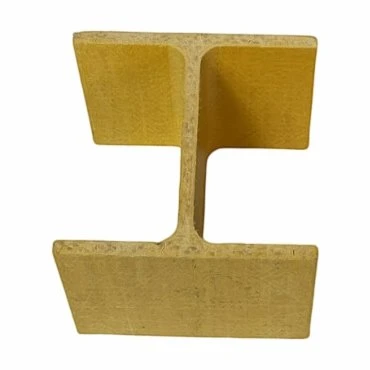
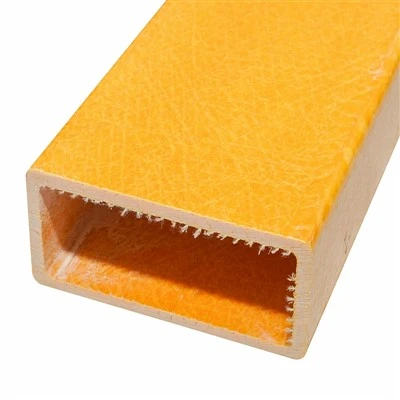
Henan Enbuess Composite Materials Co., Ltd. is one of the leading manufacturers and suppliers of fiberglass round rod in China. We are committed to providing high quality customized service for global clients. If you're going to buy high strength fiberglass round rod made in China, welcome to get free sample from our factory.
Fiberglass Round Rod That Can Be Turned, Threaded and Drilled
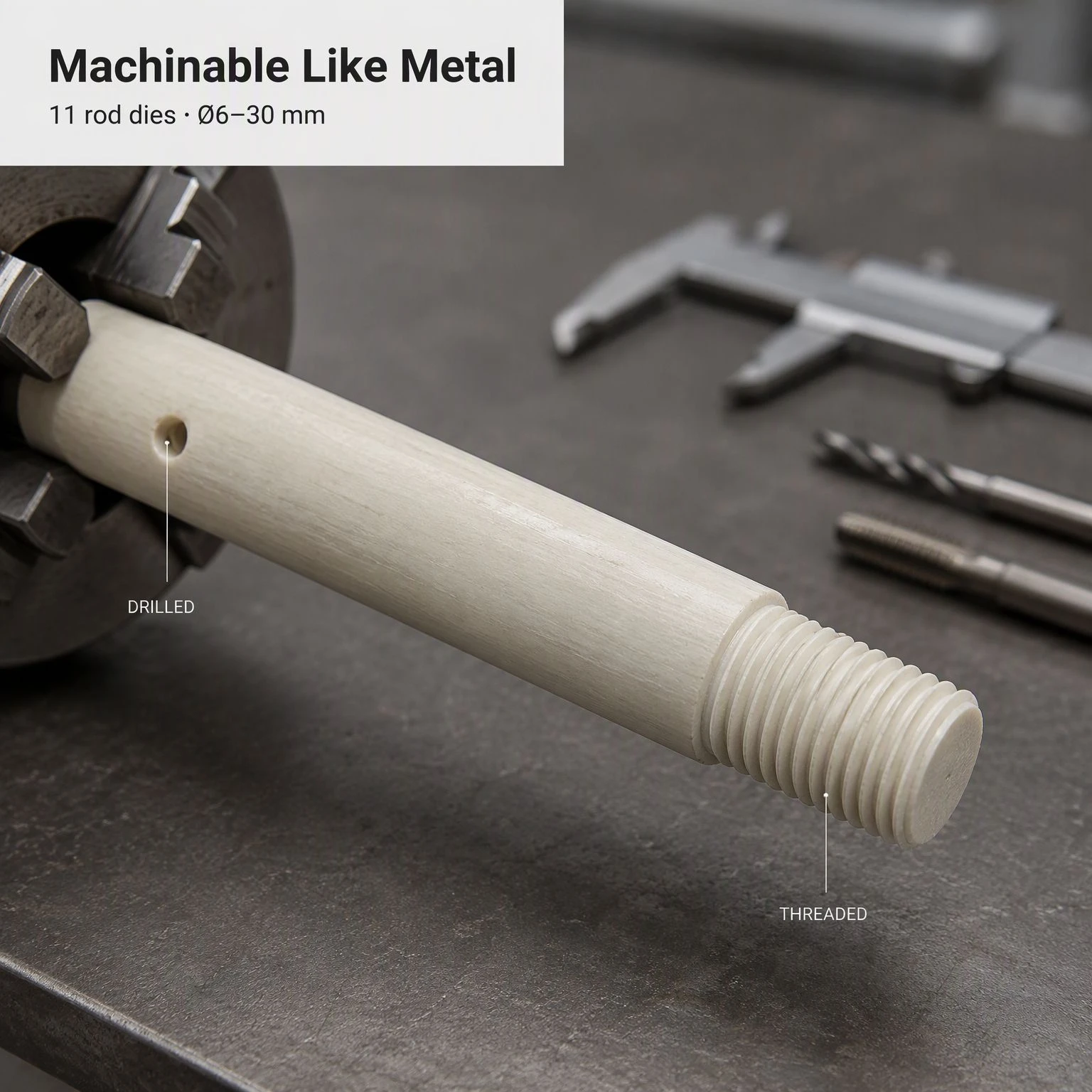
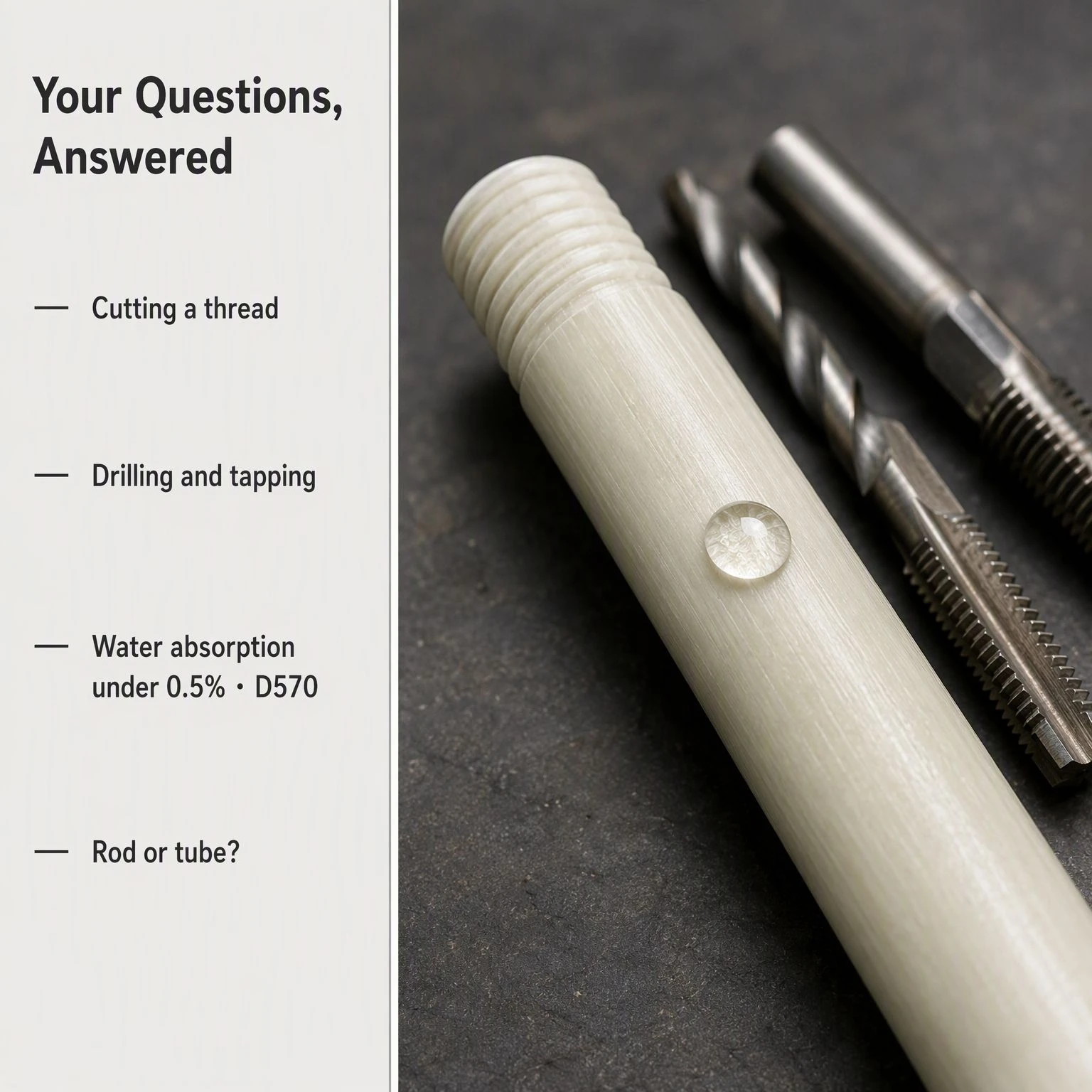
This is the one profile on our list you can machine like a metal. Solid rod can be turned on a lathe, threaded, drilled and tapped - because there is material all the way through, not a thin wall around a void.
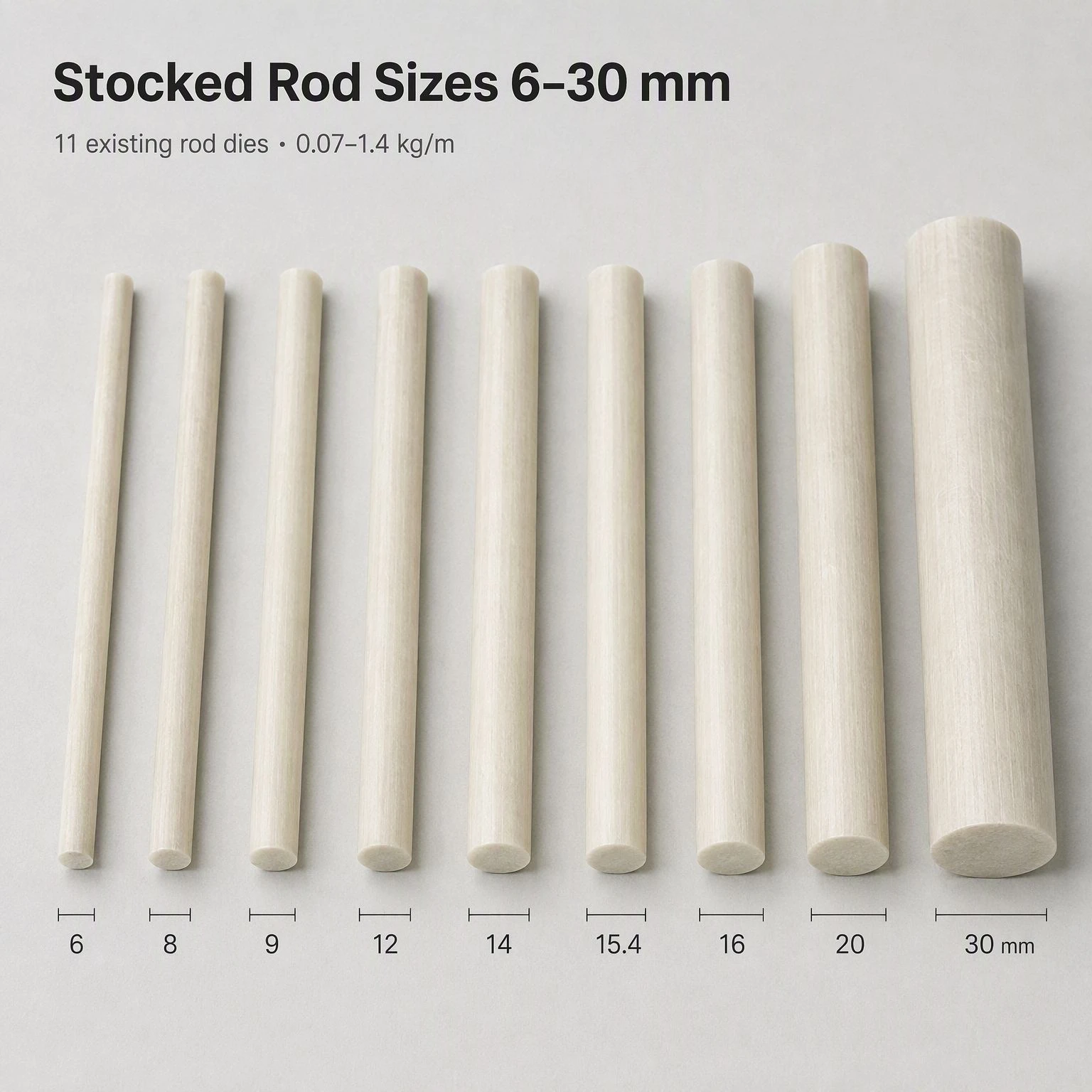
We hold eleven rod dies from 6 mm to 30 mm. Most of what we sell goes into two jobs: insulating links in electrical equipment, and machined parts that cannot be allowed to conduct.

Standard sizes
Solid rod, listed by outside diameter. All rows run on tooling we already hold.
|
Diameter (mm) |
Weight (kg/m) |
Tooling |
|
6 |
0.07 |
Existing |
|
8 |
0.09 |
Existing |
|
9 |
0.14 |
Existing |
|
12 |
0.22 |
Existing |
|
14 |
0.27 |
Existing |
|
15.4 |
0.4 |
Existing |
|
16 |
0.4 |
Existing |
|
20 |
0.68 |
Existing |
|
30 |
1.4 |
Existing |
Rod is the cheapest profile to tool after flat bar, so a diameter between these is usually a quick and inexpensive die. Tell us the size and the quantity and we will quote the tooling.
What buyers ask about this profile
Four groups. Each one is answered on this page.
Sizing
What diameter do I need for an insulating link?
Is rod or tube right for my job?
Can I get a tolerance grade?
Is my diameter held?
Machining
Can I turn it on a lathe?
Can I cut a thread on it?
Can I drill and tap it?
What tooling and speeds?
Performance
What is the dielectric strength?
Does it absorb water?
Will it splinter lengthwise?
Can I use it outdoors?
Ordering
How does it compare with steel or nylon rod?
Can I get a sample length?
Do you supply test certificates?
What is the MOQ on a custom die?
Why solid rod
Three things the solid section gives you that hollow tube does not.
|
You can machine it |
|
This is the difference that matters. A thread cut into a 3 mm tube wall will not hold; a thread cut into solid rod will, because there is material to carry it. Solid rod turns on a lathe, takes a die-cut or a turned thread, accepts a tapped hole, and can be reduced to a shoulder or a step. If your part needs a thread, a shoulder or a cross-hole, rod is the only composite starting stock that gives it to you without a moulding. |
|
Full-length fibre, all the way through |
|
Pultrusion pulls the roving continuously, so in solid rod the fibre runs unbroken down the entire length with no wall to buckle and no void to collapse. That gives the highest tensile capacity per unit area of any profile we make, and it is why rod is the standard core for composite insulators and for tension elements. |
|
It insulates at voltage |
|
Volume resistivity above 1013 Ω·cm and a high dielectric strength make rod the natural choice for operating links, insulating tie bars, and anything that has to separate a live part from an earthed one. A steel tie bar does the mechanical job and defeats the electrical one; rod does both. |

Where it gets specified
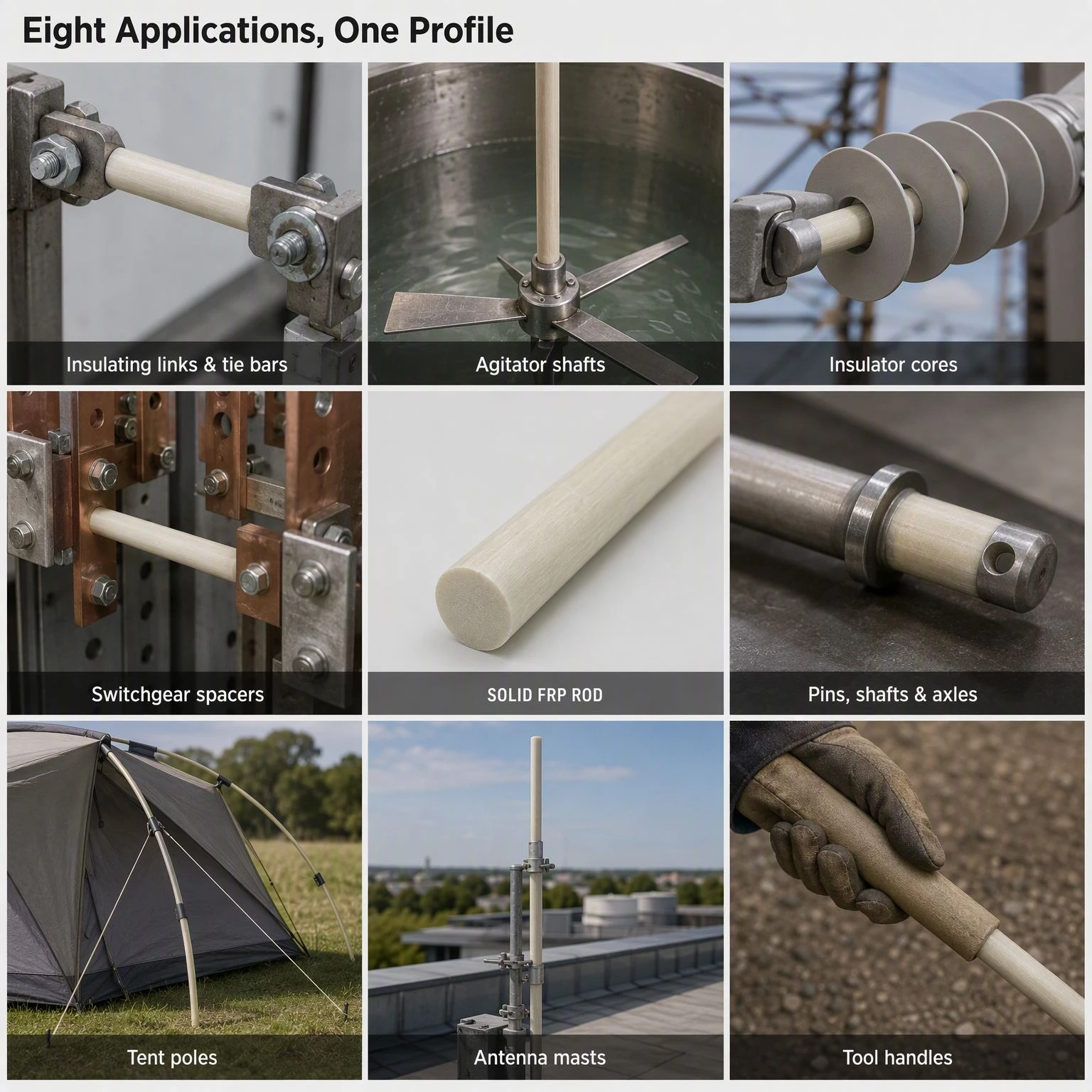
Rod is bought as a component, not as a structural member.
Insulating operating links and tie bars
Mechanical load and electrical separation in one part.
Chemical plant agitator shafts
Where a steel shaft would corrode or contaminate.
Composite insulator cores
The standard tension element, with full-length fibre.
Transformer and switchgear spacers
Insulating standoffs and barriers.
Pins, shafts and axles
Turned to size, non-conductive, will not seize.
Tent poles and frame stakes
Light, springy, and does not conduct.
Antenna elements and masts
RF transparent and non-magnetic.
Tool handles and push rods
Insulating and warm to the hand.
Against the metals and plastics you are replacing
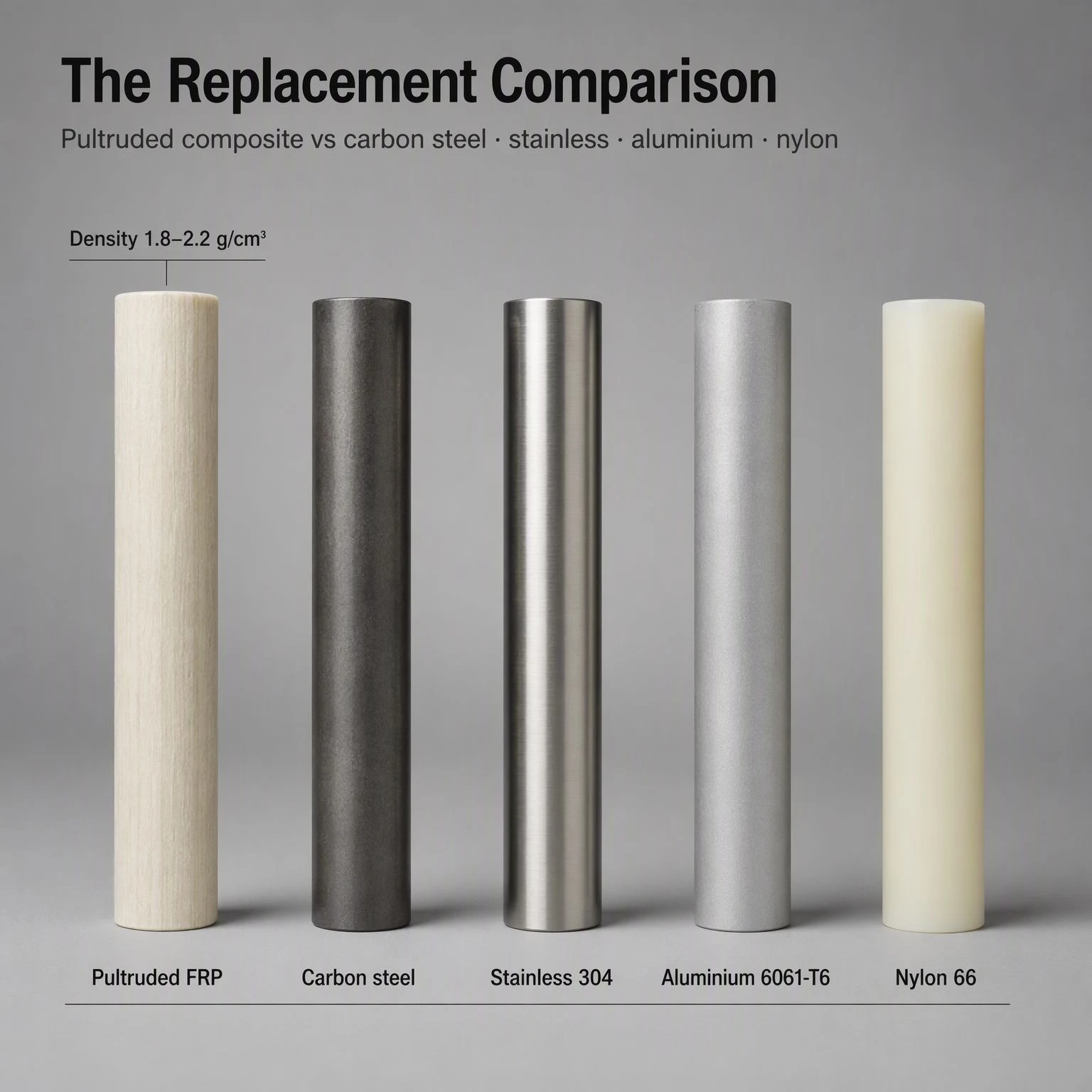
Rod is most often bought to replace steel tie bar, stainless pin stock, or engineering plastic rod.
|
Property |
Pultruded composite |
Carbon steel |
Stainless 304 |
Stainless 316 |
Aluminium 6061-T6 |
Nylon 66 |
|
Density (g/cm³) |
1.8–2.2 |
7.85 |
8 |
8 |
2.7 |
1.14 |
|
Tensile strength (MPa) |
≥ 800 |
370–500 |
515 |
515 |
310 |
80 |
|
Specific strength |
≈ 400 |
≈ 51 |
≈ 64 |
≈ 64 |
≈ 115 |
≈ 70 |
|
Electrical |
Insulating |
Conductive |
Conductive |
Conductive |
Conductive |
Insulating |
|
Creep under sustained load |
Moderate |
Very low |
Very low |
Very low |
Low |
High |
|
Water absorption |
< 0.5% |
Rusts |
None |
None |
None |
Up to 8% |
|
Machinability |
Turns and threads |
Excellent |
Good |
Good |
Excellent |
Excellent |
|
Max service temperature |
~100 °C |
High |
High |
High |
~200 °C |
~120 °C |
|
Modulus (GPa) |
≥ 40 |
~200 |
~193 |
~193 |
~69 |
~3 |
|
UV resistance |
Good with veil |
N/A |
N/A |
N/A |
N/A |
Poor without stabiliser |
|
Corrosion |
No mechanism |
Rusts |
Pits in chloride |
Good |
Pits |
Hygroscopic |
|
Maintenance, 25 yrs |
None |
Paint |
Inspect in chloride |
Low |
Oxidation control |
Replace |
Against nylon, the argument is creep and water
Engineering plastic rod is the usual alternative when insulation is the requirement. Two problems: nylon absorbs water - up to 8% by weight at saturation - which changes its dimensions and its electrical properties, and it creeps. Under a sustained tensile load a nylon tie bar stretches measurably over months. Composite rod absorbs under 0.5% and creeps far less, which is why it is used for loaded insulating members rather than for spacers alone.
Against steel, the argument is the circuit
A steel tie bar, pin or shaft in electrical equipment creates a path: for current, for eddy losses, and in the case of a long bar in an alternating field, for induced voltage. Insulating the steel is possible but it is a second part that can be damaged, omitted or fitted wrong. Composite rod removes the path as a property of the material.
What the others do better. Steel and stainless take far higher temperatures and machine faster and cleaner. Nylon is cheaper, machines beautifully and is tough in impact. All of the metals have scrap value. And for a part that carries no electrical requirement at all, steel pin stock is usually the economical answer - we would rather you bought that than rod you do not need.
Material data
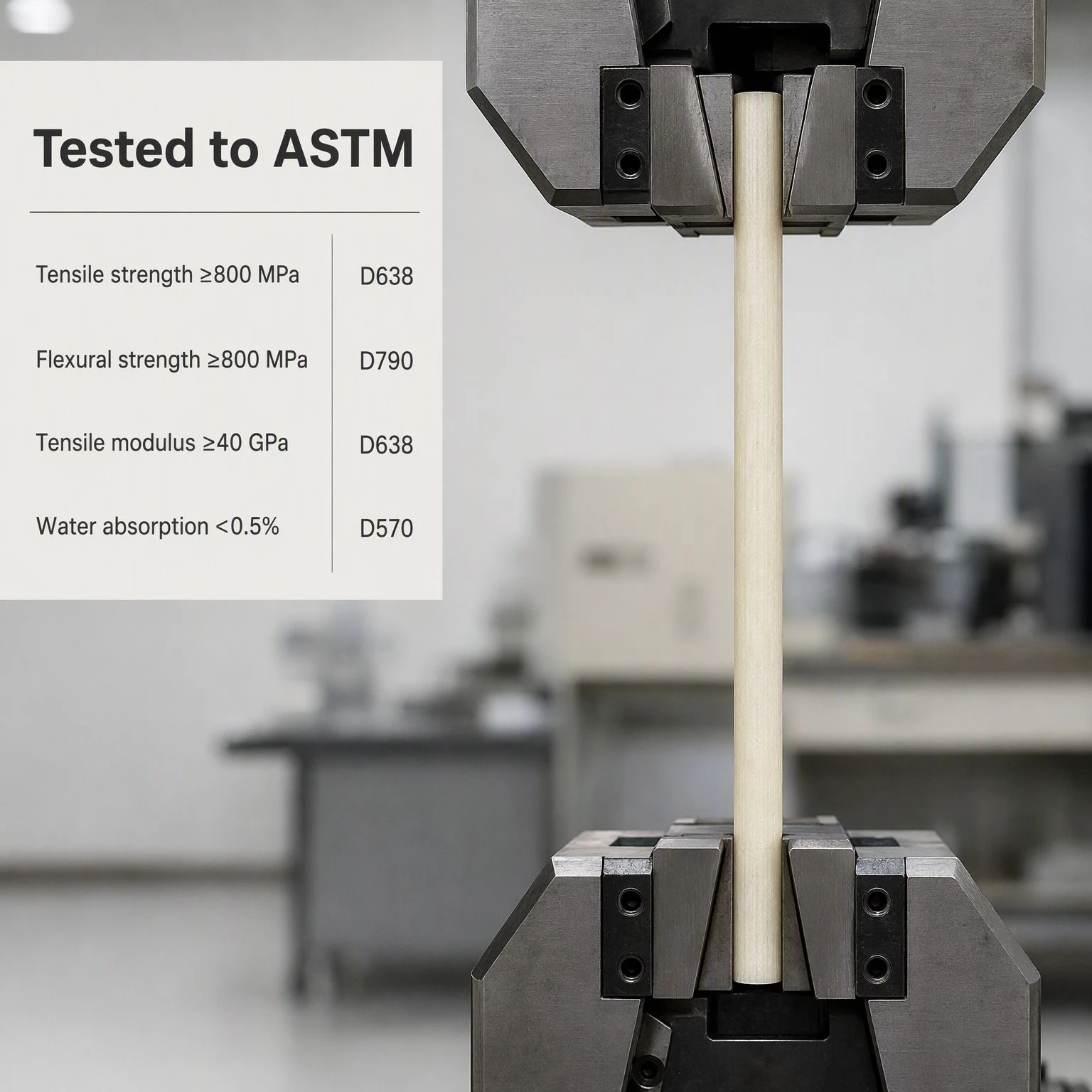
Measured to ASTM methods on the pultruded section. Values are for the composite material; section properties depend on the size you order.
| Tensile strength, longitudinal | ≥ 800 MPa · ASTM D638 | Compressive strength, longitudinal | ≥ 600 MPa · ASTM D695 |
| Tensile modulus, longitudinal | ≥ 40 GPa · ASTM D638 | Density | 1.8–2.2 g/cm³ · ASTM D792 |
| Flexural strength, longitudinal | ≥ 800 MPa · ASTM D790 | Water absorption | < 0.5% · ASTM D570 |
| Flexural modulus, longitudinal | ≥ 35 GPa · ASTM D790 | Barcol hardness | ≥ 55 HBa · ASTM D2583 |
For rod the governing numbers are usually tensile capacity along the length and dielectric strength through the section. Both depend on diameter and resin; we confirm both for the size you order.
Custom, cut to length, ordering
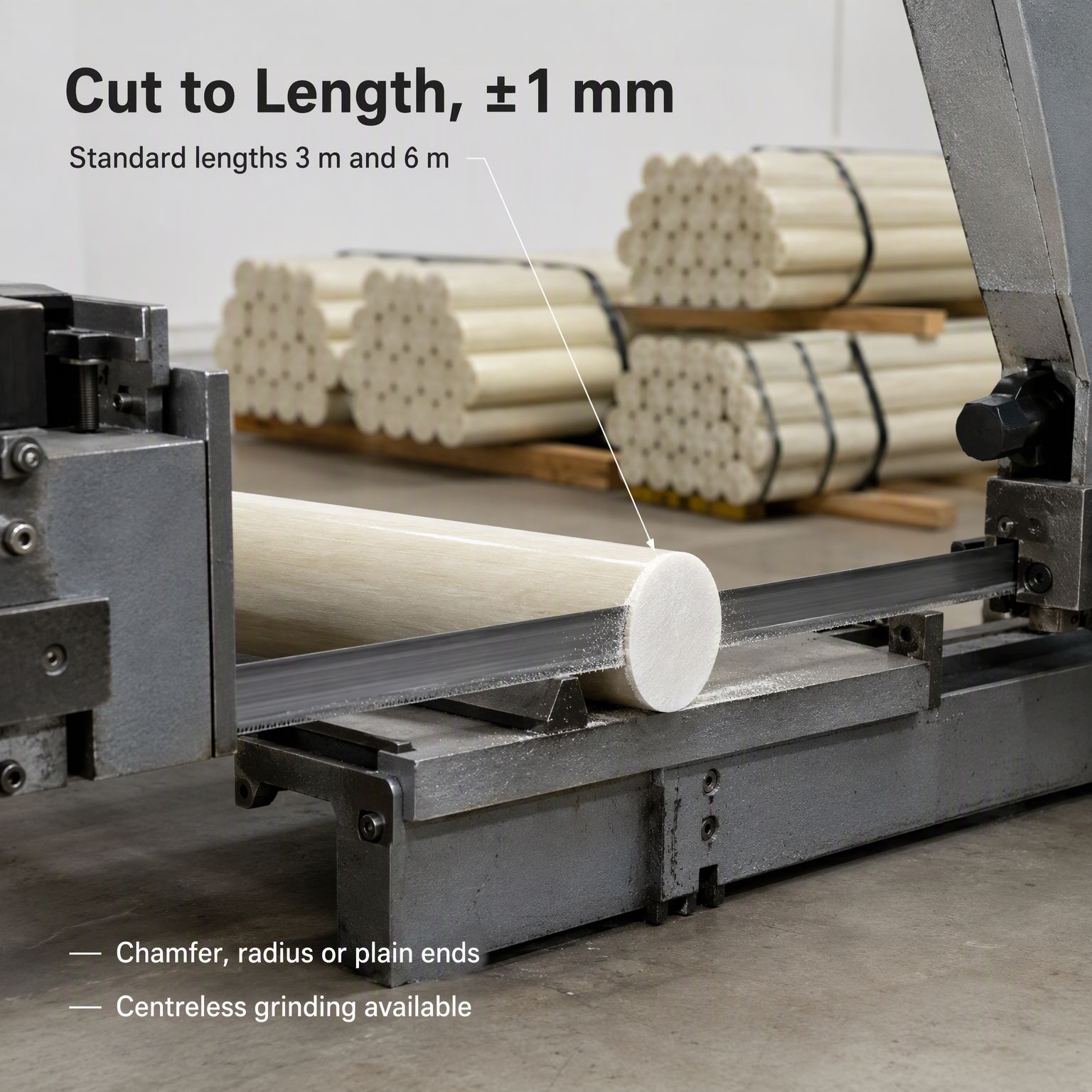
| Cut to length | ±1 mm, square cut | Standard lengths | 3 m / 6 m |
| Machining | Turning, threading, drilling to drawing | Tooling lead time | 4–6 weeks |
| Centreless grinding | To tolerance, available on request | Custom die MOQ | 1,000 m |
| End finishing | Chamfer, radius, or plain | Samples | Free samples |
| Colour | Integral pigment, RAL matched | Certificates | ISO 9001; test reports available on request |
Production Process


FAQ
Can I cut a thread on it?
Yes - a die-cut thread or a turned thread on a lathe. This is the reason to choose rod over tube: a thread in a thin wall will not carry load, a thread in solid rod will. Use sharp tooling, a moderate speed and a light cut. For a load-bearing thread, tell us the load and we will tell you the minimum minor diameter.
Can I drill and tap it?
Yes. A cross-hole through solid rod is fine, and a tapped hole will hold where a tube wall would not. Keep holes at least two diameters from the end. For a tapped hole carrying load, use a threaded insert - a thread cut directly into the material across the fibre direction is weaker than one along it.
What tooling and speeds for turning?
Sharp carbide or high-speed steel, moderate speed, light cut, and no coolant unless your process requires it. Expect a fine glass dust - extract it and wear a rated mask. This applies to every supplier's rod, not just ours.
Does it absorb water?
Under 0.5% by weight under standard test. That is why it is used for loaded insulating members outdoors, where a hygroscopic plastic would change dimension and lose electrical performance. Seal cut ends on any installation where the end grain is exposed to standing water.
Will it splinter lengthwise?
Along the length, the fibre holds it together well. What splits rod is a cross-hole too close to the end, or a notch cut into the side - the same failure mode as any fibre-reinforced section. Keep holes two diameters from the end and avoid sharp internal corners.
What is the dielectric strength?
10 kV/mm through the section, measured to the relevant standard. Tell us the working voltage and the creepage distance you need and we will confirm the diameter, or supply the test certificate for the size you are ordering.
Rod or tube?
Rod if you need to machine it, thread it, or carry tension through the full section. Tube if the part is long and weight matters more than machinability, or if it is a sleeving or conduit application. If the part needs a thread anywhere, it is rod.
How does it compare with nylon rod?
Nylon machines more easily and costs less. Composite rod is far stronger, absorbs under 0.5% water against nylon's several per cent, creeps much less under sustained load, and holds its properties outdoors. If the part is a spacer carrying no load, nylon is fine. If it carries tension or has to hold dimensions outdoors, rod is the answer.
Tell us the voltage, the load and the machining
Rod is specified by what it has to insulate and what it has to carry. Send both, plus the thread or shoulder geometry if it is a machined part, and we will confirm the diameter - or tell you if tube or a moulding would be cheaper.
Hot Tags: fiberglass round rod, China fiberglass round rod manufacturers, suppliers, factory