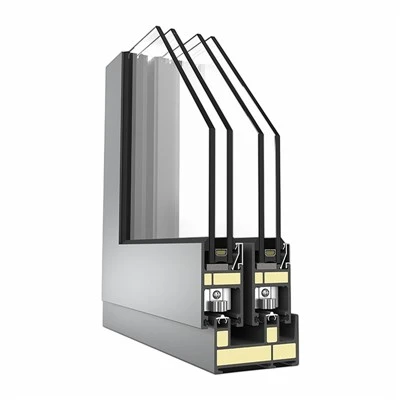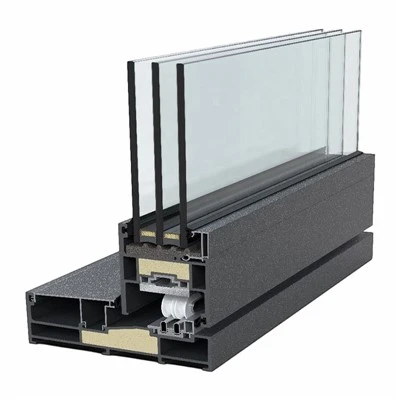


FBC 2026: Enbuess FRP Window Profiles Won the Jinxuan Award on the Huaxia Bank HQ
FBC ran 28–30 October at the China International Exhibition Center in Beijing's Shunyi district. It's the big regional show for doors, windows and facades, and this year the talk was all ultra-low-energy envelopes, solar glass and low-carbon facades. Design institutes, general contractors, facade companies and developers came by. Almost none of them wanted a brochure. They wanted to know one thing: can this material hold up on a real, large building - and what does it cost me to change?

What we actually put on the stand
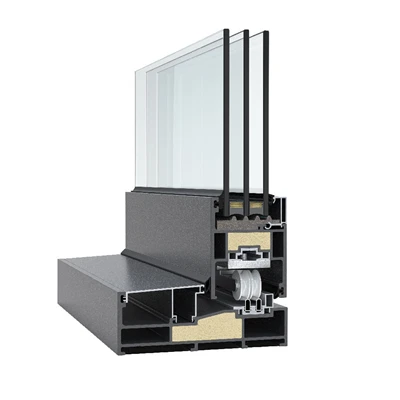
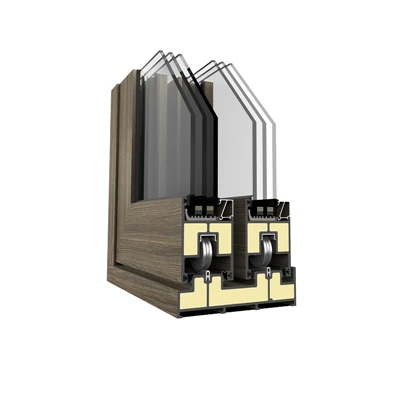
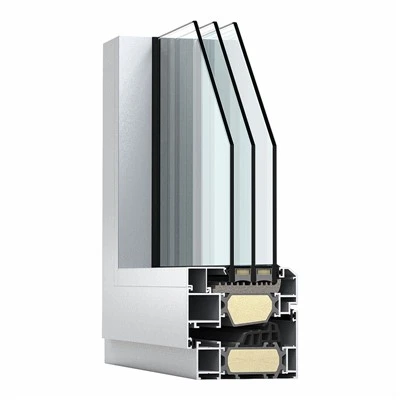
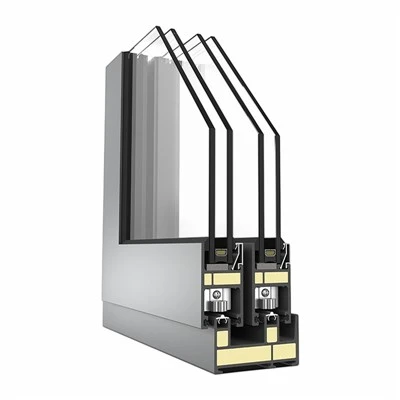
Three things,first, the ultra-low-energy curtain wall system - the whole assembly, not a pile of samples. Second, the FRP profiles that do the thermal work inside it. Third, the airtightness details: the corners, the thresholds, the bits where a wall meets a roof.
That third one is where most of the conversations happened. A profile can have a beautiful U-value and the building still leaks, because nobody resolved the joint between frame, glass and structure. Facade contractors know this. They spent their time at the junction details, not at the samples. We left the show with several cooperation talks underway.
Why window makers keep asking us about FRP
Here's the thing. The people asking aren't unhappy with aluminum. They're reacting to three things that all landed at the same time.
The energy rules stopped being optional.
GB 55015-2021 made envelope performance a legal floor for new buildings. Once a project signs up to the near-zero-energy path in GB/T 51350-2019, the frame stops being a small line in the budget. It becomes one of the last places you can claw back performance after the glass spec is locked

Owners started specifying numbers instead of materials.
They write down a U-value, an airtightness class, a condensation margin - then let the supply chain figure out how to hit it. Aluminum with a wide polyamide break can hit those numbers. So can FRP. So the real question isn't "can it", it's "which one is simpler to build, cheaper to maintain, and easier to sign off"
Aluminum vs FRP: the honest scorecard
| What you care about | Aluminum frames | FRP profiles | What to ask us for |
|---|---|---|---|
| Heat escaping through the frame | Depends on the thermal break; wider break, higher cost | FRP barely conducts heat, so the frame itself stays warm | The ISO 10077-2 frame calculation for your actual profile |
| Sweating and mould in winter | Cold spots at the frame and spacer | Warmer inner face at the same U-value | A condensation check at your design temperature |
| Rust and corrosion | Fine until the coating is damaged, then the metal is exposed | Not metal, so nothing to rust | Salt-spray test reports |
| Weight | About 2.7 g/cm³ | About 1.8–2.0 g/cm³ for glass-fibre pultrusions | Section weights, for hardware and fixings |
| Stiffness | Very stiff, and everyone knows how to design with it | Less stiff - needs deeper sections or more mullions | Wind-load and deflection calculations |
| Fire | Non-combustible | Depends on the resin system | EN 13501 or GB 8624 classification, plus smoke data |
| End of life | Easy to recycle, and it's worth money | Harder to recycle | A written recycling route |
| Price | Cheap per metre | More expensive per metre | Installed cost per m², not the profile price |
What "FRP" actually means

FRP is glass fibre held in resin, pulled through a die into a profile - that's the "pultrusion" you'll see in the datasheets. You'll find the same family of material sold as FRP window profiles, composite window profiles or glass-fibre pultrusions; the names differ by supplier, the material logic doesn't. Two consequences follow, and both matter on site.
It doesn't conduct heat the way metal does, so the frame doesn't turn into a radiator. And it isn't metal, so there's no rust and no galvanic reaction where it meets other materials.
The flip side: you can't weld it, you can't bend it on site, and it's less stiff than aluminum. Everything is mechanical connections, designed in advance. That's not a problem, but it's different - and it's why a copied aluminum detail drawing usually fails.
Phone Number
+86 16637212606
leila.salesdir@enbuess.com