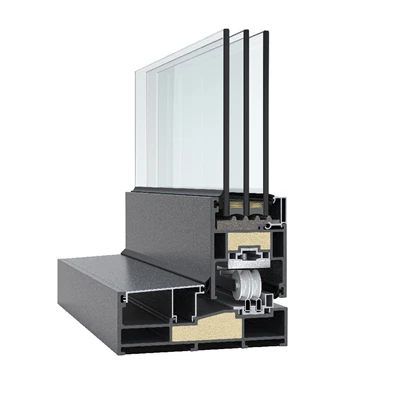
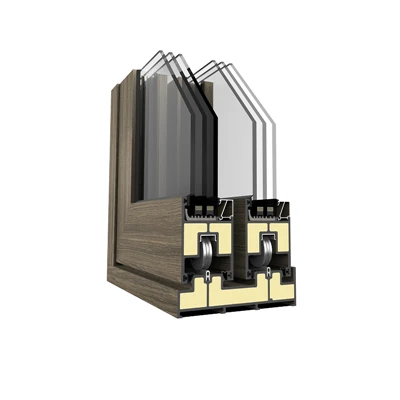
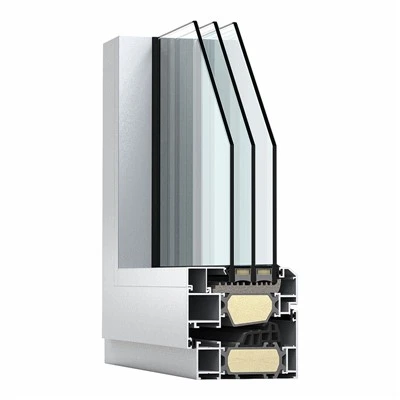
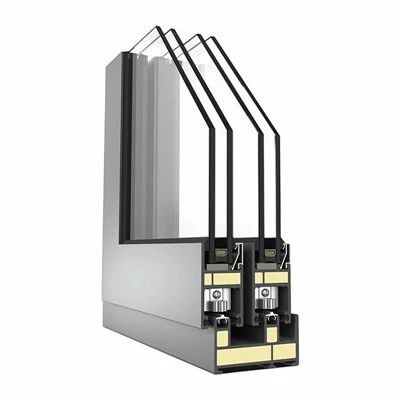
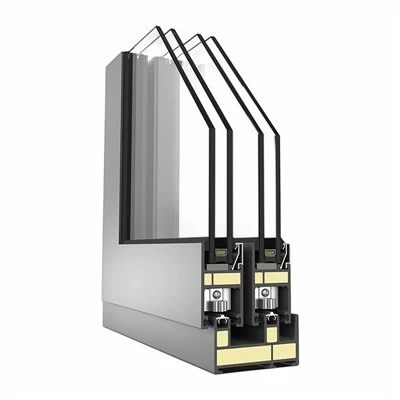
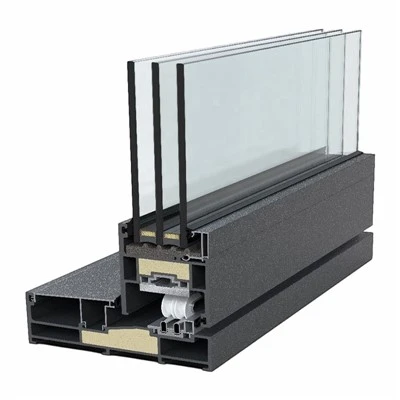
The fire resistance of fire-rated windows depends primarily on material selection and structural design. Taking aluminum fire-rated windows as an example, the frames typically utilize galvanized steel as the base material; an electrostatic spraying process creates a corrosion-resistant surface layer with a hardness of up to 110 HB (Brinell hardness), effectively resisting deformation in high-temperature environments.
The window sash is filled with thermal insulation material and features a frame thickness of 65 mm, effectively blocking heat transfer paths. The design of curved composite windows optimizes structural stress distribution to enhance overall impact resistance; pendulum impact test values reach 88 kJ/m², meeting the requirements for the Class B safety rating under national standards.